 Loading... Please wait...
What Causes Inconsistent Fill Levels in Liquid Filling Lines?
Posted on 26th Aug 2026
Inconsistent fill levels are one of the most common and costly problems on a liquid filling line. Overfilled containers give away product. Underfilled containers can trigger compliance issues, customer complaints, or rejected shipments. Either way, the result is waste, rework, and lost production time.
The frustrating part is that fill level inconsistency rarely has a single cause. It can come from the product itself, the equipment, the container, the line setup, or the way the machine is being operated. Identifying the right cause is what makes it possible to fix the problem correctly.
In this article, we cover the most common causes of inconsistent fill levels in liquid filling lines, what each one looks like in production, and what steps you can take to address it.
Why Fill Level Consistency Matters
Fill accuracy affects more than just the volume of product in each container. It affects everything downstream.
Overfilled containers can interfere with capping, cause seals to fail, or create spillage on the conveyor. Underfilled containers may pass through capping and labeling only to be caught at a checkweigher or during a quality audit, which means the problem has already consumed production time and materials before it is detected.
In regulated industries, fill level accuracy is also a compliance issue. Products sold by volume must meet net content requirements, and consistent underfilling can result in regulatory action. Even in unregulated categories, customers notice when fill levels vary from bottle to bottle.
Common Causes of Inconsistent Fill Levels (& How to Fix Them)
Fill level problems usually trace back to one or more of the following categories: product variability, equipment condition, container issues, line setup, or operator error. Below is a breakdown of each cause and what you can do about it.
1. Product Viscosity Changes
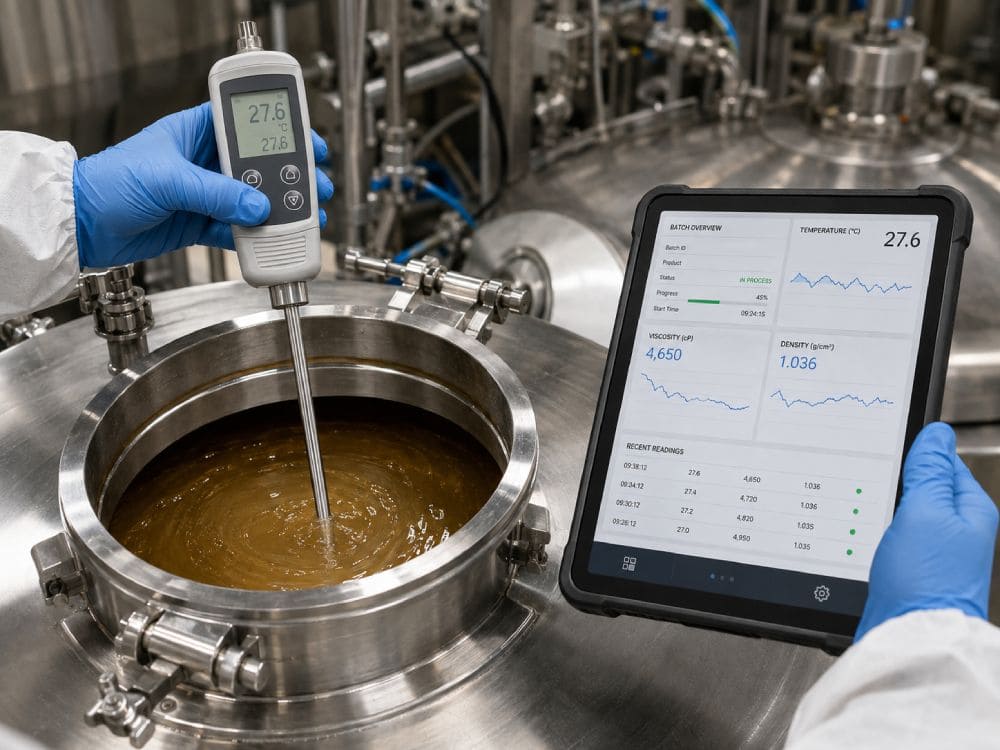
The problem: Viscosity is one of the most significant factors affecting fill accuracy. When a product's viscosity changes, the volume delivered per fill cycle changes with it, even if the machine settings remain the same. A fill cycle calibrated for a product at one viscosity will overfill or underfill when that viscosity shifts.
Viscosity can change for a number of reasons. Temperature fluctuations in the product supply tank, ingredient variations between batches, or seasonal changes in raw materials can all alter how a liquid flows through the pump and nozzle. Products that are thick or semi-viscous are especially sensitive to these shifts.
The fix: Monitor product temperature and viscosity at the start of each production run and after any batch change. If the product is temperature-sensitive, use a heated or jacketed supply tank to maintain a consistent temperature throughout the run. For operations filling multiple products or batches with variable formulations, inline viscosity monitoring can help operators catch changes before they affect fill accuracy. When viscosity shifts are expected, recalibrate fill parameters rather than running the machine on settings from a previous batch.

2. Inconsistent Product Supply Pressure
The problem: The pressure at which product reaches the fill head directly affects how much product is dispensed per cycle. If the supply tank runs low, pressure drops and fill volumes decrease. If the tank is overfilled or the product supply system is not properly regulated, pressure can spike and cause overfilling.
This is a particularly common issue on lines where the supply tank is manually filled or where there is no pressure regulation between the tank and the filler. The problem often appears gradually over the course of a production run as the tank level drops.
The fix: Keep the supply tank at a consistent level throughout the run. For gravity-fed systems, this may mean monitoring tank level more closely or adding a float valve or automated refill system. For pump-driven systems, verify that the pump is delivering consistent pressure and that the pressure regulator is functioning correctly. If fill accuracy degrades over the course of a run but is acceptable at the start, inconsistent supply pressure is a likely cause.
3. Worn or Damaged Nozzles
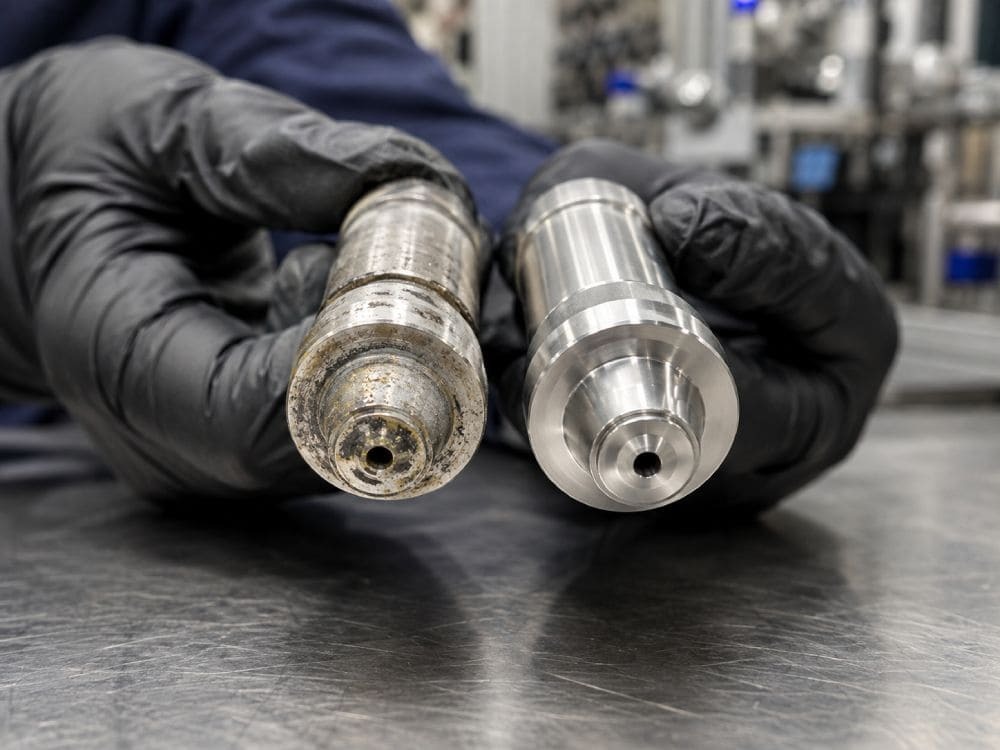
The problem: Nozzles wear over time. A nozzle that is partially clogged, worn at the tip, or out of alignment will not deliver product consistently. Worn nozzles can drip after the fill cycle closes, causing overfills. Partially blocked nozzles can restrict flow and cause underfills. In either case, the problem is often gradual and may not be immediately obvious to operators.
On lines running foamy or viscous products, nozzle wear tends to accelerate because the product places more stress on the nozzle components during each cycle.
The fix: Inspect nozzles regularly as part of a preventive maintenance schedule. Replace nozzles that show signs of wear, damage, or buildup before they cause fill problems. Keep spare parts on hand so replacements can be made quickly without extended downtime. If one fill head is consistently producing different volumes than the others, start by checking that nozzle first.
4. Pump Wear & Component Degradation
The problem: Pumps are the heart of most liquid filling systems. As pump components wear, the volume delivered per cycle shifts. Gear pumps, peristaltic pumps, and piston pumps all experience wear over time, and the result is a gradual drift in fill accuracy that can be difficult to detect until it becomes significant.
Pump wear is especially common on lines running abrasive products, highly viscous materials, or products with particulates. These products place more mechanical stress on pump components and can accelerate wear beyond what a standard maintenance schedule accounts for.
The fix: Track pump performance over time and compare fill volumes across maintenance intervals. If fill accuracy requires increasingly frequent recalibration to stay within tolerance, pump wear is likely the cause. Replace wear components on a scheduled basis rather than waiting for a failure. For products that are particularly hard on pumps, shorten the inspection interval and keep critical wear parts in stock.
5. Container Variability
The problem: Containers are not always perfectly uniform. Slight variations in internal volume, wall thickness, or shape can affect how a fill level reads visually, even when the actual fill volume is consistent. For volumetric filling systems, this is less of a concern because the machine is measuring volume, not level. But for overflow fillers or gravity systems where fill level is the primary control mechanism, container variability can create visible inconsistency from bottle to bottle.
Containers that are out of spec, whether from a supplier quality issue or a batch of rejects mixed into production, can also affect how the container sits under the fill head, which affects nozzle alignment and fill timing.
The fix: Work with your container supplier to understand the dimensional tolerances for your bottles or containers. If you are using an overflow filler and seeing level inconsistency, check whether the containers themselves are varying in internal volume. Inspect incoming container batches for obvious defects before they reach the line. If container variability is a recurring issue, consider whether a volumetric filling system would be more appropriate for your application, since it controls volume rather than level.
6. Incorrect Filling Method for the Product
The problem: Not every filling method is suited to every product. Running the wrong filling technology for your product type is a common source of fill inconsistency that is often overlooked because the machine appears to be working.
A gravity filler running a foamy product will struggle to maintain consistent fills because foam displaces liquid volume. A pump filler running a product with large particulates may clog or deliver inconsistent volumes if the pump was not designed for that product type. An overflow filler running a highly viscous product may not fill to the correct level because the product does not flow freely enough to reach the overflow ports consistently.
The fix: Review whether the filling technology currently in use is the right match for your product. If the filling method is a poor match for the product, no amount of adjustment will fully resolve the inconsistency. The right solution may be a different machine type or a reconfigured system.
7. Temperature Fluctuations in the Product
The problem: Temperature affects viscosity, and viscosity affects fill accuracy. This is especially true for products that are filled hot, such as sauces, waxes, or certain personal care products, and for products that are sensitive to ambient temperature changes during long production runs.
A product that starts a run at the right temperature may cool down in the supply tank or supply lines over time, thickening as it cools and delivering less volume per cycle. Conversely, a product that warms up during a run may thin out and overfill.
The fix: Maintain consistent product temperature from the supply tank through the fill heads. This may require a jacketed or heated supply tank, heated hoses or supply lines, and temperature monitoring at multiple points in the system. For products that are particularly temperature-sensitive, establish an acceptable temperature range and verify that the product stays within that range throughout the run. If temperature control is not currently part of your setup, it is worth evaluating whether it would improve fill consistency for your specific product.
8. Valve & Actuator Problems
The problem: Fill valves and actuators control when product flows and when it stops. Valves that are slow to respond, sticking, or inconsistent in their timing will introduce variability into every fill cycle. This type of problem tends to appear gradually as components age or as buildup accumulates inside the valve body.
A valve that opens a fraction of a second late will underfill. A valve that does not close cleanly will drip and overfill. On a high-speed line, even small timing errors compound quickly across thousands of containers.
The fix: Include valve and actuator inspection in your regular maintenance routine. Check for response time consistency, look for signs of buildup or corrosion inside valve bodies, and verify that actuators are moving through their full range of motion cleanly. If a fill head is producing inconsistent volumes that do not correlate with nozzle condition or pump wear, the valve or actuator is the next place to look.
9. Operator Setup Errors
The problem: Many fill accuracy problems trace back to inconsistent machine setup. If different operators set fill parameters slightly differently, or if parameters are adjusted during a run without being documented, fill volumes will vary between shifts and between runs. This is especially common on lines without programmable controls, where every setup requires manual adjustment.
Setup errors are not always obvious. An operator may set fill timing or pump speed slightly outside the correct range without realizing it, and the resulting fills may be close enough to pass a quick visual check but outside tolerance on a checkweigher.
The fix: Document setup procedures for every product and container combination. Use clearly marked adjustment points and reference the correct settings in writing. If the machine supports programmable logic controllers (PLCs) with stored recipes, use them. Stored recipes eliminate the variability that comes from manual setup and ensure that every operator starts a run with the correct parameters. Verify fill accuracy with a sample check at the start of every run before releasing production containers.
10. Line Speed Set Too High for the Filling Method
The problem: Running a line faster than the filling method can reliably support is a common cause of fill inconsistency. At higher speeds, nozzles may not have enough time to complete a clean fill cycle. Product pressure may fluctuate as the system struggles to keep up. Containers may arrive at the fill head before the previous fill cycle has fully closed.
This problem often appears when a line is pushed to meet a production target without evaluating whether the current equipment can support the higher speed accurately.
The fix: Verify that the line speed is within the rated capacity of the filling equipment for your specific product and container combination. If fill accuracy degrades at higher speeds, the solution is not always to slow down permanently. It may be possible to add fill heads to increase throughput without increasing cycle speed, or to upgrade to a filling technology that can maintain accuracy at the required rate. Evaluate the constraint before making changes, and confirm that fill accuracy is acceptable at the target speed before releasing the line for full production.
How to Troubleshoot Fill Level Problems
When fill levels are inconsistent, the temptation is to start adjusting machine settings until the problem improves. That approach can work temporarily, but it rarely addresses the underlying cause. A more reliable process is to work through the likely causes in a logical order.
Start with the Product
Before looking at the machine, verify that the product entering the filler is consistent. Check temperature, viscosity, and batch-to-batch variability. If the product has changed, the machine settings may need to be updated to match.
Check the Supply System
Confirm that the supply tank is at the correct level and that product pressure at the fill head is stable throughout the run. A pressure gauge installed between the supply tank and the filler can make this easy to monitor in real time.
Inspect the Fill Heads
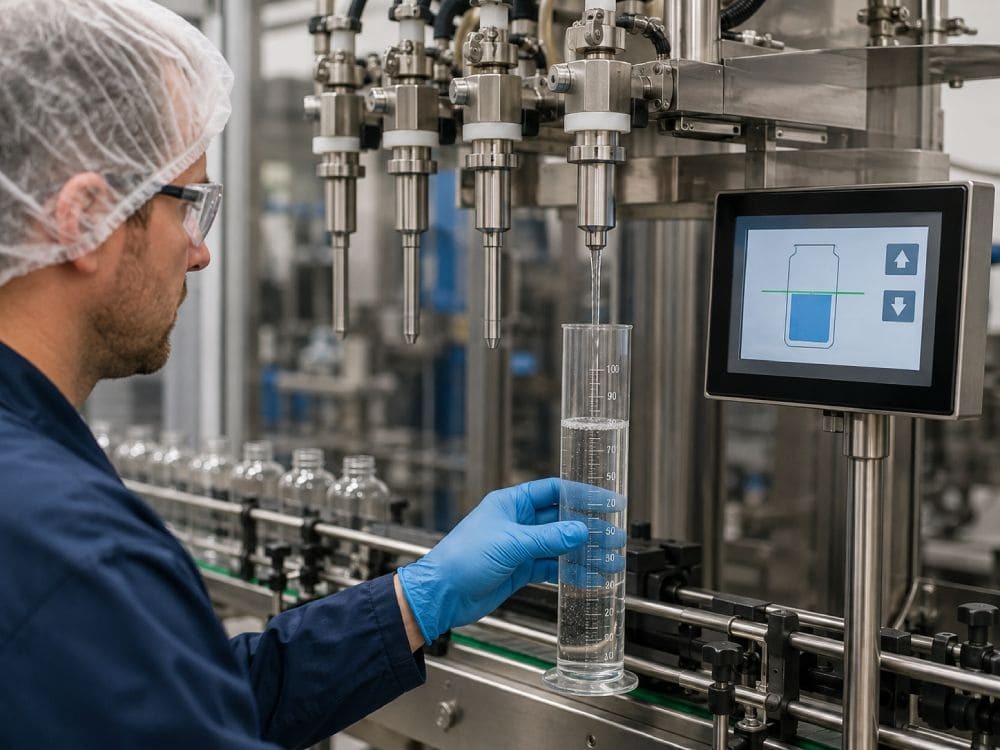
Check nozzles for wear, buildup, or misalignment. Verify that all fill heads are delivering the same volume by running a manual sample check on each one separately. If one head is consistently off, the problem is localized and easier to diagnose.
Review the Setup Parameters
Compare the current machine settings against the documented setup for this product and container combination. If settings have drifted or were entered incorrectly, correct them and verify fill accuracy before resuming production.
Evaluate Line Speed
If fill accuracy is acceptable at a lower speed but degrades at the production target speed, the line is being pushed beyond what the current equipment can reliably support. Address the capacity constraint rather than accepting reduced accuracy.
Look at Maintenance History
If the machine has not been serviced recently, check pump wear, valve response times, and seal condition. Gradual drift in fill accuracy that has developed over time is often a maintenance issue rather than a setup issue.
FAQs About Inconsistent Fill Levels in Liquid Filling Lines
What Is the Most Common Cause of Inconsistent Fill Levels?
The most common causes are product viscosity changes, worn nozzles or pump components, and inconsistent machine setup. In many cases, more than one factor is contributing to the problem.
How Do I Know If My Filling Machine Is the Wrong Type for My Product?
Signs that the filling method is not well-matched to the product include fill accuracy that never fully stabilizes despite correct setup and maintenance, frequent nozzle clogging, excessive foaming during filling, or product stringing or tailing at the nozzle. If you are experiencing persistent fill inconsistency and have already ruled out product variability and equipment condition, the filling method itself may need to be evaluated.
How Often Should I Check Fill Accuracy During a Production Run?
At minimum, verify fill accuracy at the start of each run before releasing containers into production. For longer runs, periodic spot checks throughout the shift help catch problems before they affect a large number of containers. The right frequency depends on your product, your equipment, and your tolerance for variation. High-value products and regulated applications warrant more frequent checks.
What Role Does Preventive Maintenance Play in Fill Accuracy?
Preventive maintenance is one of the most effective ways to protect fill accuracy over time. Nozzle wear, pump degradation, valve drift, and seal failures all develop gradually and can cause fill accuracy to decline slowly without a single obvious failure event. A regular maintenance schedule that includes inspection and replacement of wear components before they fail keeps the machine performing within specification and reduces the likelihood of unplanned downtime.
When Should I Contact a Liquid Filling Machine Manufacturer About Fill Level Problems?
If you have worked through the common causes and cannot identify the source of the inconsistency, or if the problem is persistent despite correct setup and recent maintenance, it is worth contacting the machine manufacturer or a qualified filling equipment supplier. They can help evaluate whether the equipment is still the right fit for the product, whether a component needs replacement, or whether a different filling method or configuration would improve performance.
Get Consistent Fill Levels with the Right Equipment & Support from E-PAK Machinery
Inconsistent fill levels are a solvable problem. In most cases, the cause traces back to something specific: a product that has changed, a component that has worn, a setup that has drifted, or a filling method that was never the right match for the application. Working through the causes systematically is what leads to a lasting fix.
At E-PAK Machinery, we work with manufacturers across a wide range of industries and products to identify the right filling equipment and configuration for their application. Whether you are troubleshooting a fill accuracy problem on an existing line, evaluating whether your current machine is still the right fit for your product, or building a new line from the ground up, we can help you work through the options and find a solution that performs consistently in real production conditions.
Are you dealing with inconsistent fill levels on your liquid filling line? Contact us today to discuss your application and explore the equipment and support options that make sense for your operation.
Recent Posts
- Custom-Engineered vs. Standard Filling Machines: When Each Makes Sense
- Why Labeling Machines Misalign Labels (& How to Fix It)
- Labeling Machine Guide: Choosing the Right System for Your Product
- How to Increase Filling Line Throughput Without Sacrificing Accuracy
- What Causes Inconsistent Fill Levels in Liquid Filling Lines?
