 Loading... Please wait...
Blog
Custom-Engineered vs. Standard Filling Machines: When Each Makes Sense
Posted on 30th Sep 2026
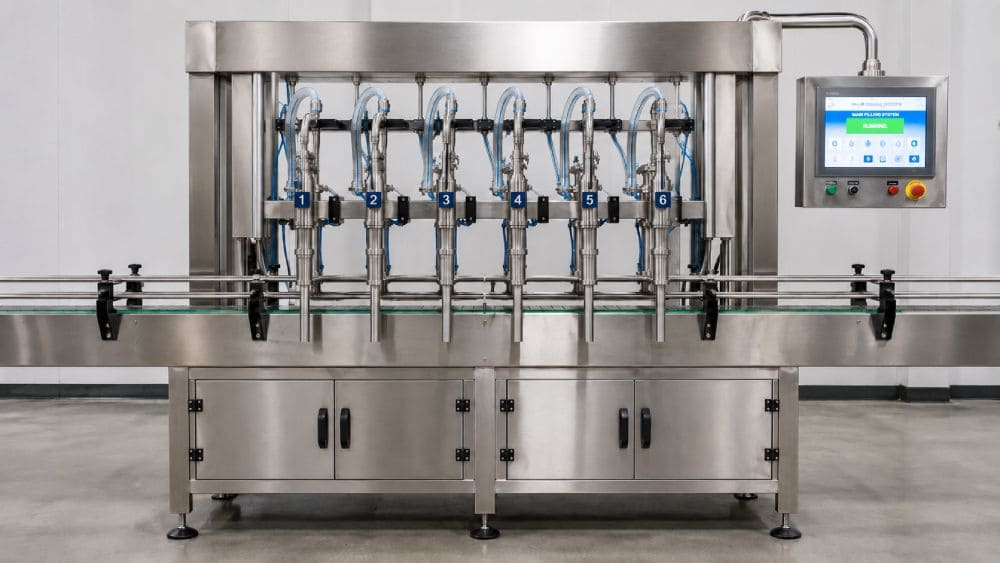
Choosing a filling machine is not just about matching a model to a fill volume. The right equipment has to work with your product, container, production speed, facility layout, cleaning process, and long-term growth plans.
Some production lines can run efficiently with a standard filling machine based on a proven equipment platform. Others need a custom-engineered solution because the product, container, layout, compliance requirements, or automation goals are too complex for a one-size-fits-most configuration.
In this article, we’ll break down the differences between standard and custom-engineered filling machines, key factors to evaluate, and how to decide which type of filling machine makes the most sense for your operation.
What Are Standard Filling Machines?
Standard filling machines are pre-designed equipment platforms built around proven filling technologies. These machines are commonly used for applications where the product, container, fill volume, and production requirements fit an established machine design.
That doesn’t mean standard machines are generic or low quality. In many cases, a standard filling machine can still be configured for the application. The number of fill heads, nozzle style, product-contact parts, conveyor setup, controls, and automation level may all vary based on production needs.
Common Types of Standard Filling Machines
Standard filling machines are available in several formats, and each one is designed to handle different product characteristics, fill requirements, and production environments. Common options include:
- Gravity fillers
- Overflow fillers
- Piston fillers
- Pump fillers
- Pressure fillers
- Net weight fillers
- Molten product fillers
Additionally, standard filling machines can be manual, semi-automatic, or fully automatic, depending on the production environment. A smaller operation may only need a semi-automatic filler to improve consistency and reduce manual work. A higher-volume operation may need a fully automatic system that works with conveyors, cappers, labelers, date coders, and other packaging equipment.
When Standard Filling Machines Work Well
Standard filling machines often make sense when the application is straightforward. For example, if the liquid has predictable flow characteristics, the container format is common, and the required speed is within the machine’s normal range, a standard platform may be the most practical option.
They are also a strong fit when production requirements are stable. If the line runs a familiar product, uses common bottle or container formats, and doesn’t require unusual integration, a standard machine can provide reliable performance without unnecessary engineering complexity.
Advantages of Standard Filling Machines
The main advantage is simplicity. Buyers can often move through the specification process faster because the equipment is based on an existing design. Standard machines may also come with lower upfront engineering complexity, easier operator training, and a proven mechanical foundation.
Standard filling machines can also be a cost-effective choice when the application fits the machine well. Because the core platform has already been developed and tested, the buyer can focus on selecting the right configuration instead of starting from a blank engineering process.
Limitations of Standard Filling Machines
A standard machine can become a problem when the application has too many unusual variables. Products that foam, drip, string, separate, contain particulates, change viscosity, or require heating may need more than a standard configuration.
The same is true for unusual containers, tight facility layouts, strict sanitary requirements, hazardous environments, or highly automated production goals. In these cases, forcing the application into a standard machine can create ongoing issues with accuracy, downtime, cleaning, changeover, or long-term scalability.
A standard machine is a strong choice when it fits the job. It becomes a weak choice when the operation has to keep working around its limitations.
What Are Custom-Engineered Filling Machines?
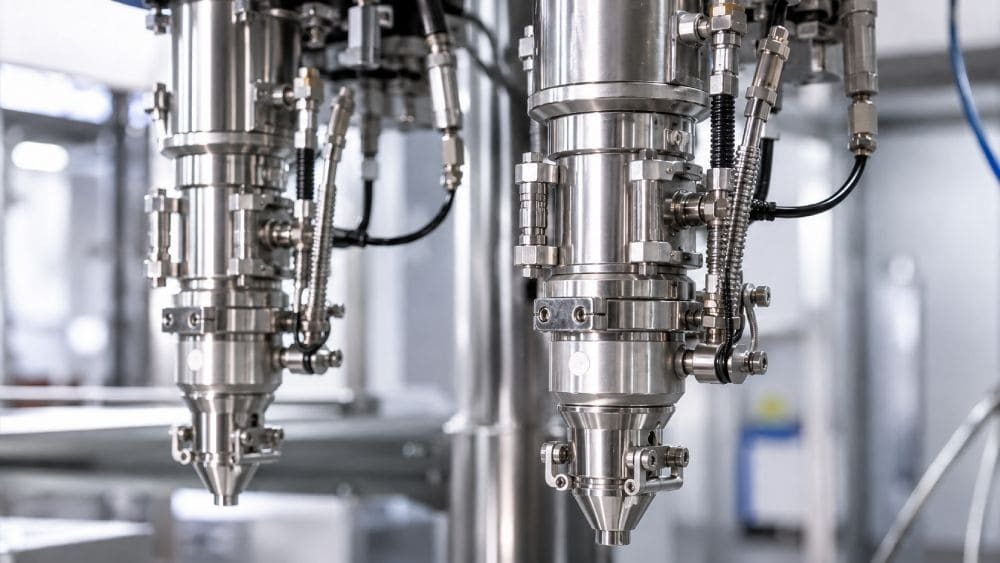
Custom-engineered filling machines are designed or heavily modified around the specific requirements of a production line. Instead of starting with a fixed machine and forcing the application to fit, the process starts by understanding the product, container, facility, speed requirements, cleaning needs, automation goals, and long-term production plans.
A custom-engineered system may involve a fully purpose-built filler, or it may involve a standard machine platform with major application-specific modifications. The level of customization depends on the production challenge.
Common Custom Engineering Options
Depending on the application, customization may include:
- Fill technology selection
- Number of fill heads
- Nozzle design
- Product-path design
- Pumps, pistons, valves, tanks, or reservoirs
- Sanitary, corrosive, hazardous, or molten-product configurations
- Container-handling components
- Conveyor layout
- Changeover design
- PLC, HMI, sensor, and control integration
- Guarding and operator-access planning
- Integration with cappers, labelers, coders, turntables, conveyors, and other equipment
- Facility footprint and line-layout adjustments
Custom engineering can involve the filler itself, the surrounding equipment, or the way the machine connects with the rest of the packaging line.
When Custom-Engineered Filling Machines Work Well
A custom-engineered filling machine is often the better fit when the product is difficult to fill or the production line has requirements that standard equipment cannot handle cleanly. For example, a thick sauce with particulates may need different handling than a thin household cleaner, while a molten product may require temperature control.
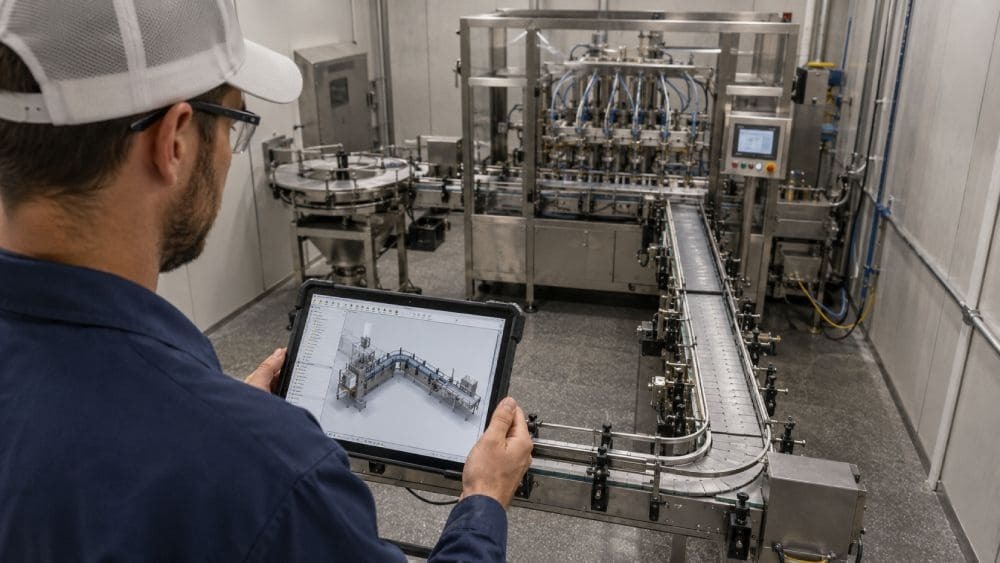
Custom engineering is also useful when the filling machine needs to become part of a larger, integrated packaging line. The filler may need to work with existing conveyors, cappers, labelers, bottle cleaners, accumulation tables, or coding equipment. It might also need to fit into a plant layout with limited floor space, utility restrictions, operator-access needs, or special cleaning procedures.
Advantages of Custom-Engineered Filling Machines
The biggest advantage of a custom-engineered filling machine is fit. The system can be designed around the real product, container, speed, layout, and workflow requirements instead of asking the operation to adapt to a machine that was not built for the job. That better fit can support stronger accuracy, smoother product handling, faster changeovers, easier cleaning, better line integration, and improved scalability.
In the right application, custom engineering can also reduce recurring costs tied to waste, downtime, rework, labor, maintenance issues, and future equipment limitations.
Limitations of Custom-Engineered Filling Machines
The tradeoff is that custom-engineered systems usually require more planning. The discovery process is more detailed because the equipment manufacturer needs to understand the product, containers, production goals, facility constraints, cleaning process, and integration requirements before recommending a design.
Custom-engineered systems may also involve a longer timeline and a higher upfront investment, which means it should solve a real production challenge. If a standard machine can handle the application well, adding unnecessary engineering may increase complexity without improving performance.
Custom-Engineered vs. Standard Filling Machines: What’s the Difference?
The biggest difference between “custom” versus “off-the-shelf” filling machines is how closely the machine is designed around the application.
A standard filling machine starts with a proven equipment platform and is configured within available options. A custom-engineered filling machine, on the other hand, starts with the application requirements and builds the system around them.
|
Factor |
Standard Filling Machines |
Custom-Engineered Filling Machines |
|
Best fit |
Common applications with predictable products, containers, and production goals |
Complex applications with unique product behavior, container formats, facility layouts, or automation needs |
|
Design approach |
Built from an existing equipment platform or proven machine model |
Designed or heavily modified around the specific application |
|
Configuration level |
Configurable within available machine options |
Highly configurable or purpose-built |
|
Product compatibility |
Works well when viscosity, foaming, particulates, temperature, and fill behavior match the machine’s capabilities |
Suited for difficult-to-fill products, specialty liquids, corrosive products, molten products, sanitary products, or hazardous environments |
|
Container compatibility |
Ideal for common bottle, jar, tube, cup, or container formats |
Better for unusual shapes, multiple container sizes, fragile packaging, or difficult handling requirements |
|
Throughput |
Strong fit for defined production volumes that match standard machine speeds |
Can be designed around target output, scalability, labor reduction, and line-balancing needs |
|
Integration |
Can often integrate with common conveyors, cappers, labelers, and packaging equipment |
Can be engineered around a complete line layout, existing equipment, floor-space limits, and downstream processes |
|
Changeover |
May offer standard changeover features and parts |
Can be designed for faster, more repeatable changeovers across multiple SKUs |
|
Lead time |
Often shorter, depending on availability and configuration |
Often longer because of engineering, testing, and build requirements |
|
Upfront cost |
Often lower than a custom-engineered system |
Often higher due to engineering time, specialized components, and custom fabrication |
|
Long-term value |
Strong when the application is stable and fits the machine well |
Strong when customization reduces labor, waste, downtime, rework, or future replacement costs |
|
Risk of mismatch |
Higher if the application is forced into a machine that is not suited for the product or line |
Lower when the system is properly specified, tested, and built around real production conditions |
A standard filling machine is usually the better investment when your needs match proven machine designs. A custom-engineered filling machine is usually the better investment when forcing a standard machine to fit would create accuracy issues, downtime, maintenance problems, sanitation concerns, or scaling limits.
Key Evaluation Criteria & Factors to Consider
Price is important, but it shouldn’t drive the decision by itself. A low-cost machine that causes downtime, waste, rejected product, or cleaning delays can quickly become the more expensive option.
A better approach is to evaluate the application from several angles.
Product Characteristics
The liquid itself often determines which filling technology makes sense. Viscosity, texture, temperature, foaming, particulates, corrosiveness, and product behavior during filling all make a difference.
Ask questions such as:
- Is the product thin, thick, foamy, sticky, abrasive, corrosive, chunky, molten, or temperature-sensitive?
- Does it contain particulates?
- Does viscosity change during production?
- Does the product drip, string, splash, or separate?
- Does it require heating, agitation, special seals, or specific product-contact materials?
If the product behaves consistently, a standard machine may work well. If it creates handling challenges, custom engineering may reduce waste, downtime, and operator frustration.
Fill Accuracy Requirements
Fill accuracy affects product quality, compliance, customer satisfaction, and profitability. Overfilling can drain margins, while underfilling can create quality or regulatory problems.
Ask questions such as:
- How tight does the fill tolerance need to be?
- Is the product expensive enough that overfill creates a major cost issue?
- Would underfill create a compliance or quality problem?
- Does the application require filling by level, volume, weight, or another method?
- Can the required accuracy be maintained at the desired production speed?
A standard machine may meet normal accuracy needs. Custom engineering becomes more important when tight accuracy must be maintained across difficult products, high speeds, or multiple container sizes.
Container & Closure Variety
The container can be just as important as the product. Shape, opening size, stability, material, and closure type can all affect the filling process.
Ask questions such as:
- How many container sizes will run on the line?
- Are containers rigid, flexible, narrow-necked, wide-mouth, fragile, or unusually shaped?
- Will the line need frequent SKU changeovers?
- Do caps, plugs, closures, or labels affect the filling process?
- Does the container require special handling before, during, or after filling?
If container variety is high, changeover design becomes critical. Custom guides, timing, indexing, nozzles, or handling components may make production more repeatable.
Production Volume & Throughput Goals
A filling machine should support current production without becoming a bottleneck as demand grows. The right choice depends on speed, shift schedule, labor goals, and future output needs.
Ask questions such as:
- What is the current output requirement?
- What output will the line need in 12, 24, or 36 months?
- How many shifts will the equipment run?
- Is the goal to increase speed, reduce labor, improve consistency, or support new products?
- Which machine or process currently limits production?
Stable production needs may fit a standard machine. Growth-focused operations may need to plan for scalability, added fill heads, automation, or future line integration.
Automation Level
Automation should solve a real production problem. A fully automatic machine is not necessarily better if the operation does not need that level of speed or integration.
Ask questions such as:
- Does the operation need manual, semi-automatic, or fully automatic equipment?
- Where are operators currently spending the most time?
- Which steps create bottlenecks before or after filling?
- Should filling integrate with capping, labeling, coding, conveyors, turntables, or accumulation systems?
- Will automation reduce repetitive labor, improve consistency, or speed up the line?
A filler should not be evaluated in isolation. If capping, labeling, or container handling is the real bottleneck, a faster filler may not solve the larger issue.
Facility Layout & Floor Space
Even the right filling technology can cause problems if the machine does not fit the facility. Floor space, operator access, utilities, drainage, ventilation, cleaning access, and material flow all matter.
Ask questions such as:
- How much floor space is available?
- Does the line need to fit around existing equipment?
- Are utilities, drainage, ventilation, washdown areas, or hazardous-area requirements involved?
- Do operators and maintenance teams have enough access?
- How will containers, products, packaging materials, and finished goods move through the space?
A standard machine may work mechanically but still create layout problems. A custom-engineered solution can be designed around the physical realities of the plant.
Sanitary, Corrosive, Hazardous, or Industry-Specific Requirements
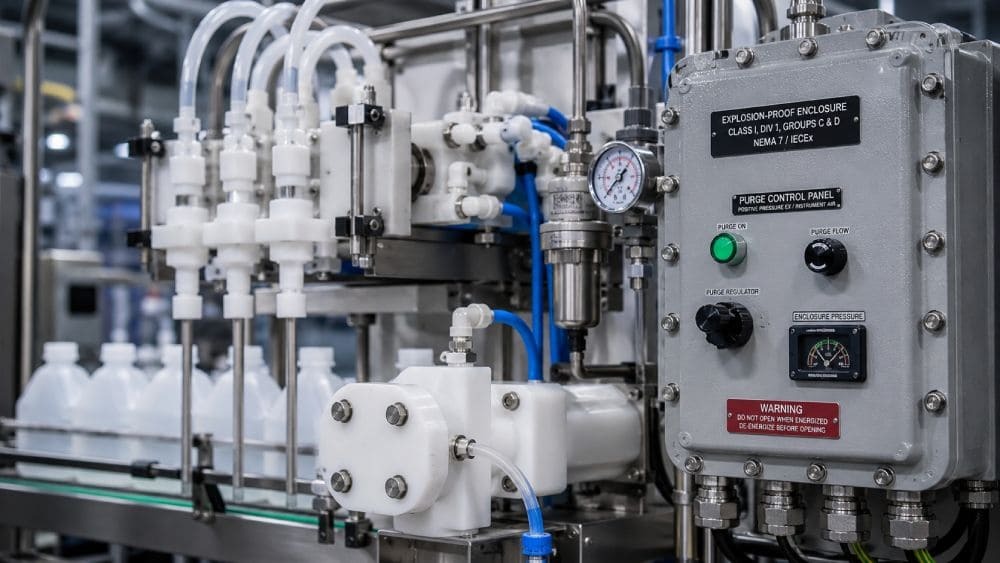
Some applications require more than basic filling performance. Food-grade, sanitary, corrosive, chemical, petroleum, pharmaceutical, and hazardous-location applications may require specific materials, controls, seals, fittings, or cleaning access.
Ask questions such as:
- Does the product require sanitary or food-grade design?
- Is the product corrosive or chemically aggressive?
- Does the application involve flammable liquids or hazardous-location considerations?
- Are specific product-contact materials required?
- Does the equipment need washdown compatibility or special cleaning access?
These requirements often determine whether a standard configuration is enough or a custom-engineered system is needed.
Cleaning, Maintenance, & Changeover
Cleaning and changeover time can have a major effect on productivity, especially when the line runs multiple products, container sizes, allergens, colors, flavors, or chemicals.
Ask questions such as:
- How often does the line change products or containers?
- How much downtime can the team afford for cleaning?
- Are quick-disconnect fittings, tool-less changeover, or washdown-friendly components needed?
- Can operators clean and maintain the machine without excessive disassembly?
- Are changeovers repeatable from shift to shift?
Custom engineering may be valuable when faster cleaning or changeover directly improves uptime and production capacity.
Total Cost of Ownership
The purchase price is only one part of the cost. A filling machine also affects labor, waste, downtime, maintenance, rejected product, training, cleaning time, changeover time, and future upgrade costs.
Ask questions such as:
- What is the upfront cost?
- How much labor will the machine require?
- How much product is lost to overfill, dripping, splashing, or rejected containers?
- How often will the machine need maintenance?
- How much downtime will cleaning and changeover require?
- Will the machine support future products and production growth?
A standard machine may deliver the best total value for straightforward applications. A custom-engineered system may offer better long-term value when it reduces recurring costs or prevents future equipment limitations.
How to Choose Between Standard & Custom-Engineered Filling Machines
The right choice depends on whether the application fits proven equipment or requires a deeper engineering approach.
When Standard Filling Machines Make Sense
A standard filling machine may be the right choice when the application is clear, stable, and well matched to existing filling technology.
Standard filling machines often make sense when:
- The product is straightforward to fill.
- Viscosity, foaming, temperature, and particulates are not major challenges.
- Containers are common sizes and shapes.
- Fill volumes and production speeds are within normal machine capabilities.
- The line does not require unusual integration or facility-specific modifications.
- The budget or timeline favors a proven, configurable platform.
- Production needs are stable and unlikely to change dramatically in the near future.
- The company wants reliable equipment without unnecessary engineering complexity.
In these cases, a standard machine can provide the accuracy, reliability, and productivity needed without overcomplicating the project.
When Custom-Engineered Filling Machines Make Sense
A custom-engineered filling machine may be the better choice when the application has complexity that cannot be handled cleanly by a standard configuration.
Custom-engineered filling machines often make sense when:
- The product is thick, foamy, corrosive, abrasive, chunky, molten, sticky, or temperature-sensitive.
- The application requires sanitary, hazardous-location, corrosive, or specialty-material design.
- The line runs multiple container sizes, unusual packaging formats, or frequent changeovers.
- Existing standard machines would require too many compromises.
- The facility layout has space, utility, access, or integration constraints.
- The company needs more automation to reduce labor and improve consistency.
- Production volume is growing and the equipment needs to scale.
- Accuracy, repeatability, and waste reduction are major financial drivers.
- The system must integrate with cappers, labelers, conveyors, date coders, turntables, or other packaging equipment.
The goal is to buy the simplest system that can reliably handle the application now and support future production needs.
FAQs About Custom-Engineered vs. Standard Filling Machines
Are Standard Filling Machines Still Customizable?
Yes. Many standard filling machines can be configured with different fill heads, nozzles, pumps, tanks, controls, conveyors, product-contact materials, and change parts. The difference is that the machine starts from an existing platform rather than being engineered from the ground up.
Is a Custom-Engineered Filling Machine Always Better?
No. A custom-engineered system is not automatically the better choice. If a standard machine fits the product, container, volume, facility, and accuracy requirements, it may be the smarter and more cost-effective option.
When Is a Custom-Engineered Filling Machine Worth the Investment?
A custom-engineered filling machine is often worth the investment when customization reduces waste, downtime, manual labor, cleaning time, changeover delays, product loss, or future replacement costs. It may also be worthwhile when the product or container would create constant problems on a standard setup.
What Product Characteristics Make Filling More Complex?
Foaming, high viscosity, low viscosity, particulates, corrosiveness, abrasiveness, stickiness, temperature sensitivity, separation, dripping, stringing, and molten behavior can all make filling more complex. These characteristics can affect the filling method, nozzle design, product path, materials, cleaning process, and machine controls.
Can One Filling Machine Handle Multiple Products?
In many cases, yes. One machine may be able to handle multiple products when it is designed with the right filling technology, compatible product-contact materials, and proper changeover features. However, product differences should be reviewed carefully before assuming one machine can handle every SKU.
How Do I Know Which Filling Technology I Need?
The best filling technology depends on the liquid, container, fill volume, accuracy requirement, production speed, and operating environment. Common options include gravity, overflow, piston, pump, pressure, net weight, and molten filling systems.
Does Higher Automation Always Mean Better Performance?
Not always. Automation should solve a real production problem. A semi-automatic machine may be enough for lower-volume operations, while a fully automatic or custom-engineered line may be better for higher volumes, labor reduction, tighter process control, and multi-machine integration.
What Information Should I Prepare Before Requesting a Quote?
Prepare details about the product, viscosity, container sizes, fill volumes, desired speed, production schedule, cleaning process, facility layout, utilities, regulatory requirements, and any existing equipment that needs to connect with the filler. Product samples, container samples, and photos or drawings of the line can also help the equipment provider recommend the right system.
Can Filling Machines Be Integrated with Capping & Labeling Equipment?
Yes. Filling machines can often be integrated with conveyors, cappers, labelers, turntables, date coders, bottle-cleaning equipment, and other packaging machinery. Integration needs should be discussed early so the full line can be planned properly.
What Is the Biggest Mistake Buyers Make When Choosing a Filling Machine?
One of the biggest mistakes buyers make when choosing a filling machine is focusing on upfront price alone. A machine that is poorly matched to the application can cost more over time through downtime, product waste, operator frustration, maintenance issues, cleaning delays, and limited scalability.
Find the Right Filling Machine for Your Production Line at E-PAK Machinery
Standard filling machines and custom-engineered filling machines both have a place. The right choice depends on the product, container, fill accuracy, production volume, facility layout, cleaning needs, automation goals, and long-term production plans.
Whether you need a proven standard filling machine or a custom-engineered system built around your production line, E-PAK Machinery can help. We’re a leader in the product filling industry, and we are proud to offer a wide variety of liquid filling machines with the latest technological advancements and the most modern tools. Our goal is to provide you with high-quality and durable equipment that meets your unique packaging needs.
Contact us today so our experienced liquid packaging professionals can help you find the perfect filling machine for your production line.
Why Labeling Machines Misalign Labels (& How to Fix It)
Label misalignment is one of the most visible problems on a packaging line. A label that sits crooked, rides too high, wraps unevenly, or shifts from container to container is hard to miss, and it creates real downstream consequences. In regulated industries, a shifted label can cover required disclosures or move lot codes out of [...]
Labeling Machine Guide: Choosing the Right System for Your Product
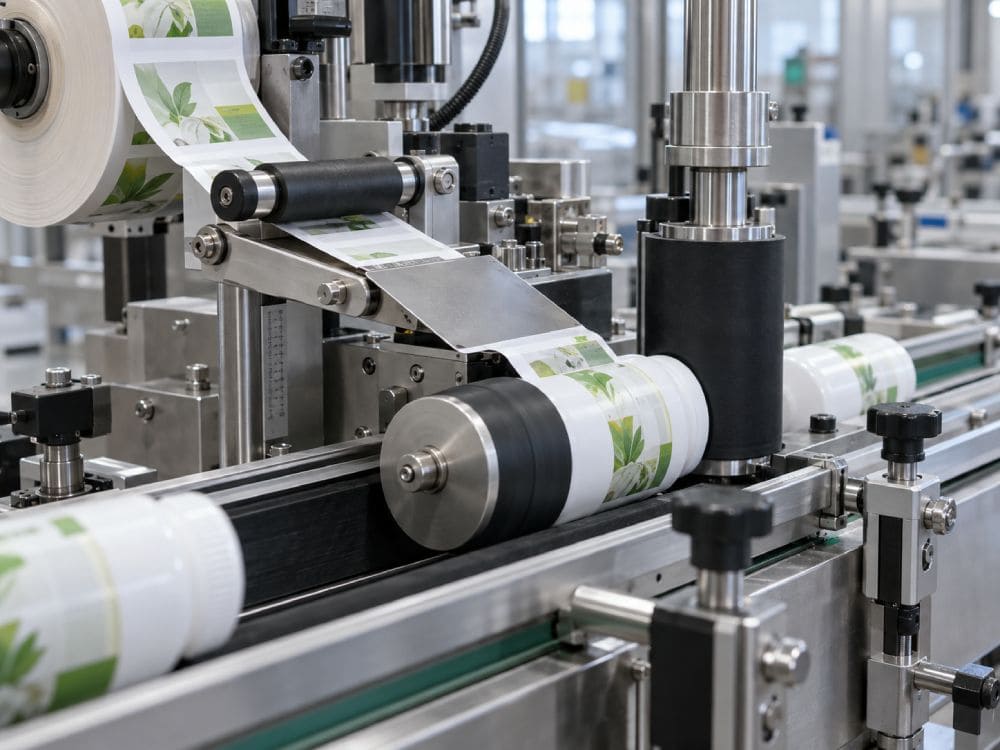
Choosing the right labeling machine is one of those decisions that looks straightforward until you are standing in front of a shortlist of equipment and trying to figure out why two machines with similar specs produce very different results on your line. The label is one of the last things applied to a container before it [...]

How to Increase Filling Line Throughput Without Sacrificing Accuracy
Running a filling line faster is a goal most manufacturers share. More output per shift means better margins, shorter lead times, and the ability to meet growing demand without adding equipment or labor. The challenge is that speed and accuracy are often treated as opposites. Push the line too hard without the right setup, and [...]
What Causes Inconsistent Fill Levels in Liquid Filling Lines?
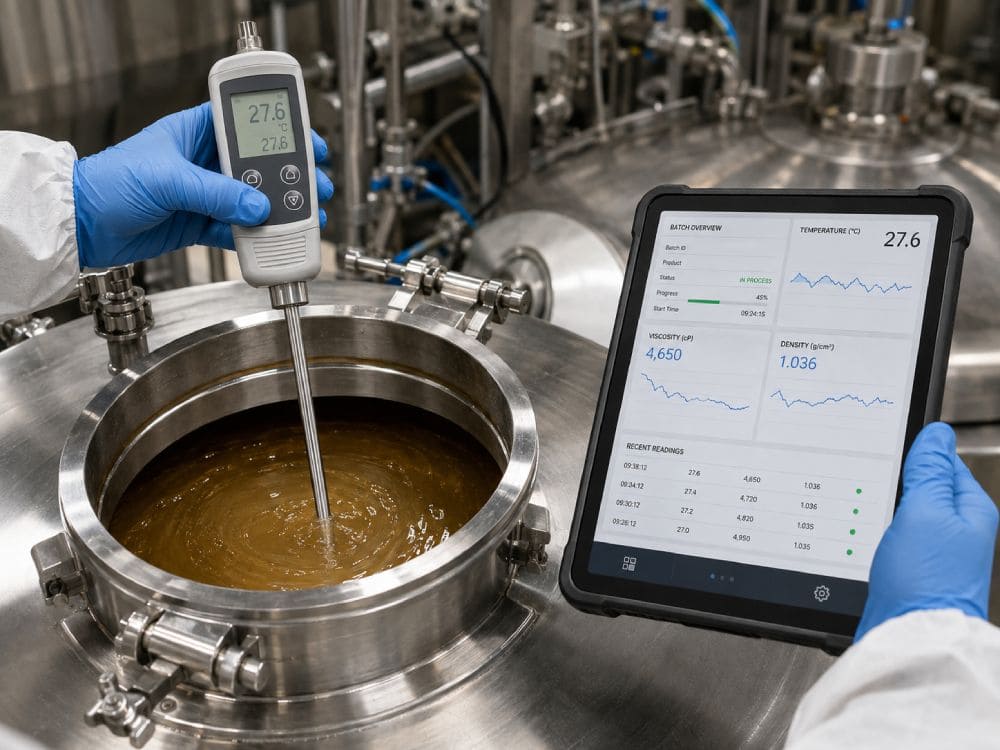
Inconsistent fill levels are one of the most common and costly problems on a liquid filling line. Overfilled containers give away product. Underfilled containers can trigger compliance issues, customer complaints, or rejected shipments. Either way, the result is waste, rework, and lost production time. The frustrating part is that fill level inconsistency rarely has a single [...]
How to Vet a Liquid Filling Machine Manufacturer
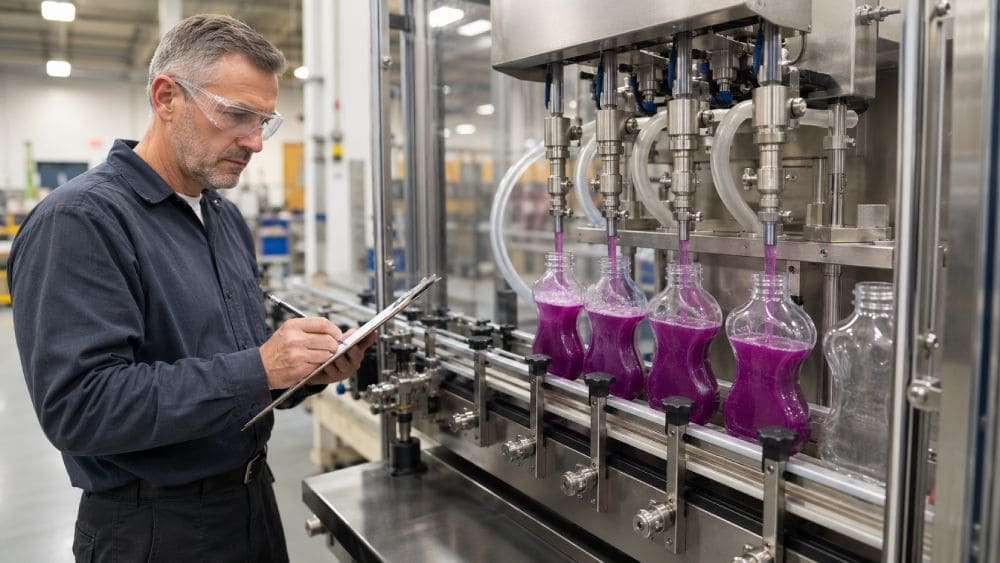
Buying a liquid filling machine is a major production decision. The right equipment can improve output, accuracy, consistency, and uptime. The wrong fit can lead to waste, slow changeovers, maintenance issues, and problems across the rest of your packaging line. That’s why it’s important to vet the manufacturer, not just the machine. A qualified supplier should [...]

Filling Line Integration: How Fillers, Cappers, Conveyors, & Labelers Work Together
Most packaging problems are not machine problems. They are integration problems. A filler that works perfectly in isolation can cause downstream chaos if the conveyor cannot keep pace. A capper that applies consistent torque on one container type may struggle when the labeler upstream has already slowed the line. A labeler that places labels with precision [...]

Chuck Cappers vs. Spindle Cappers: Comparison & Selection Guide
Choosing the right capping machine is one of the more important decisions in packaging line design. Get it right and every container leaves the line sealed consistently, with the correct torque, at the speed your operation demands. Get it wrong and you are dealing with stripped threads, inconsistent seals, rejected containers, and downtime that compounds [...]
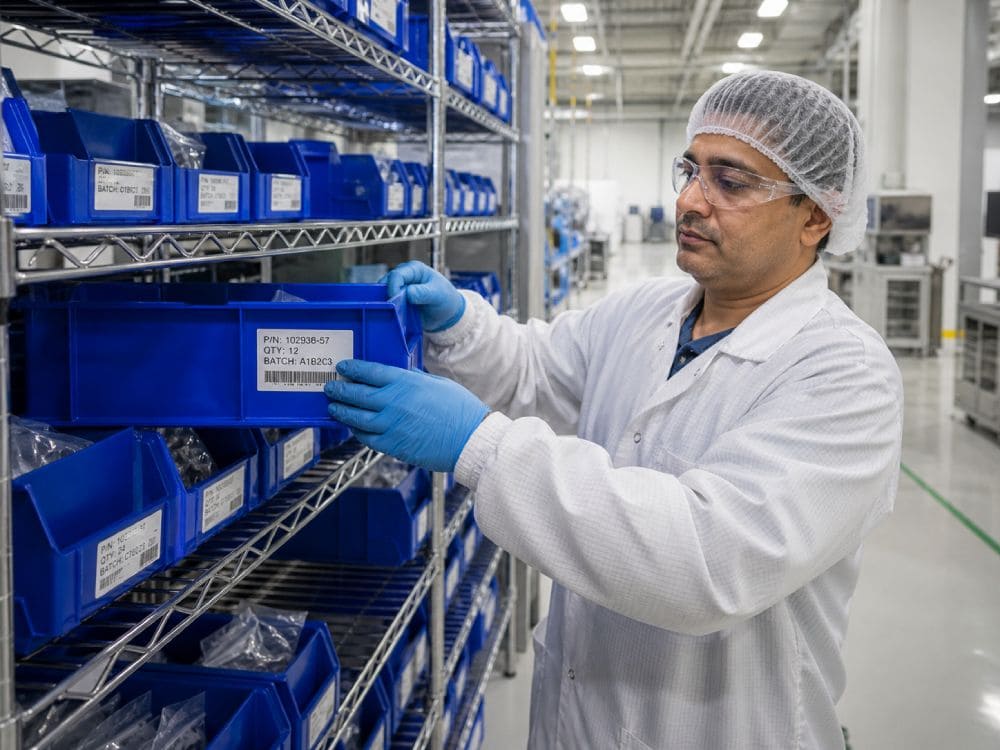
Top 9 Packaging Machine Spare Parts Every Facility Should Keep in Stock
Unplanned downtime is one of the most expensive problems in any packaging operation. A single failed component can bring an entire production line to a halt, delaying shipments, wasting labor hours, and creating unnecessary pressure across the organization. Yet many facilities still rely on reactive maintenance, waiting for something to break before taking action. That approach [...]
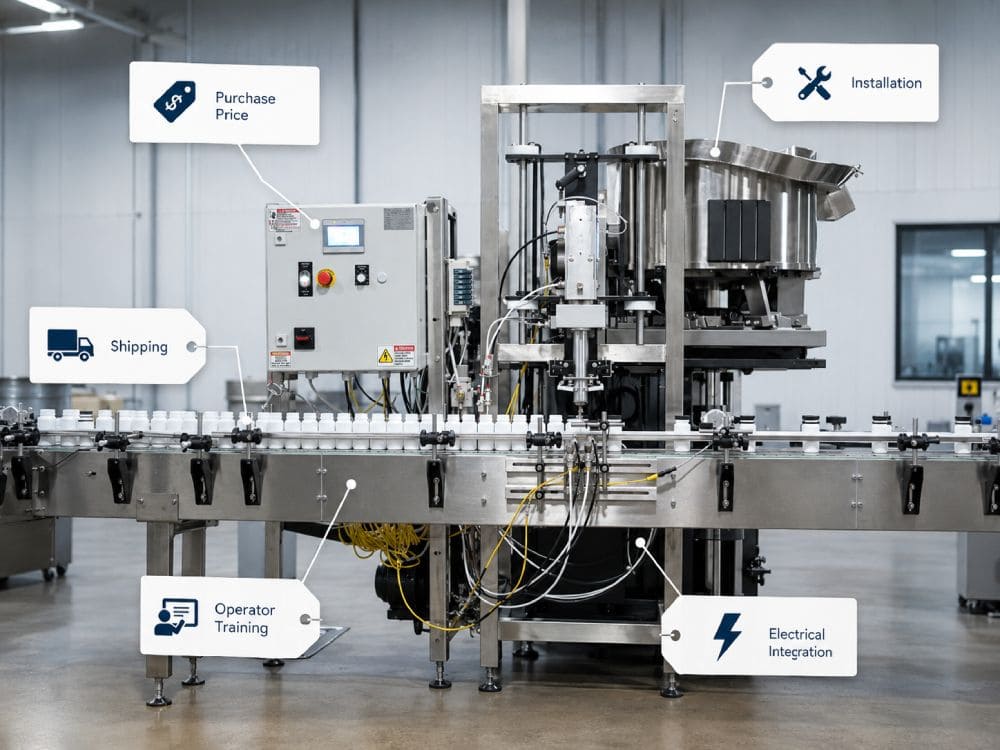
How to Calculate Packaging Machine ROI: Costs, Savings, & Payback Period Explained
For many manufacturers, the decision to invest in new packaging equipment or upgrade an existing line comes down to one question: Will it pay off? The cost of a packaging machine goes far beyond the price tag, and without a clear way to measure return on investment, it becomes difficult to justify the spend or compare [...]
Recent Posts
- Custom-Engineered vs. Standard Filling Machines: When Each Makes Sense
- Why Labeling Machines Misalign Labels (& How to Fix It)
- Labeling Machine Guide: Choosing the Right System for Your Product
- How to Increase Filling Line Throughput Without Sacrificing Accuracy
- What Causes Inconsistent Fill Levels in Liquid Filling Lines?
