 Loading... Please wait...
Top 9 Packaging Machine Spare Parts Every Facility Should Keep in Stock
Posted on 7th May 2026
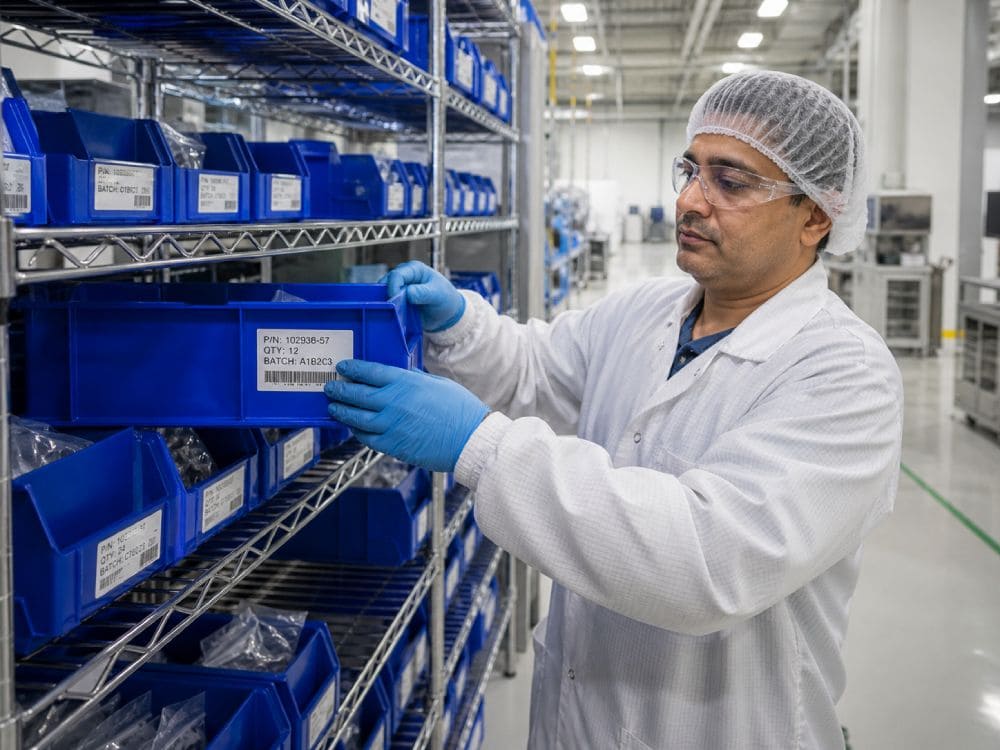
Unplanned downtime is one of the most expensive problems in any packaging operation. A single failed component can bring an entire production line to a halt, delaying shipments, wasting labor hours, and creating unnecessary pressure across the organization. Yet many facilities still rely on reactive maintenance, waiting for something to break before taking action.
That approach doesn't work in high-output environments. Modern packaging operations demand consistency, speed, and reliability.
The difference between a line that runs smoothly and one that constantly struggles often comes down to preparation. Having the right spare parts on hand is a strategic move that protects productivity, stabilizes output, and gives operations teams control when issues arise.
In this guide, we break down the most critical packaging machine spare parts to keep in stock so your facility can stay ahead of failures instead of reacting to them.
Benefits of Having Spare Parts for Packaging Machines on Hand
Downtime doesn’t start when a machine breaks. It starts when the right part isn’t within reach. Facilities that keep critical spare parts on hand fix problems faster, avoid escalation, protect output, and keep operations steady even when something goes wrong.
Reduced Downtime & Faster Recovery
When a critical component fails and no replacement is available, production stops. Every minute of downtime compounds into missed deadlines, lost revenue, and frustrated teams.
With the right parts in inventory, maintenance teams can act immediately. Repairs happen on your timeline, not a supplier’s, which keeps disruptions short and controlled.
Lower Emergency & Maintenance Costs
Rush orders, overnight freight, and last-minute technician support add up quickly. These costs rarely show up in planning but hit hard during breakdowns.
A well-planned inventory removes that pressure. Instead of reacting with expensive fixes, teams can handle issues with parts already on-site, keeping costs predictable.
Extended Equipment Lifespan
Small, worn components often lead to larger failures when ignored. A degraded seal or bearing may seem minor, but it can damage surrounding systems over time.
Replacing high-wear parts early protects more expensive components and keeps equipment running within expected performance ranges.
Increased Team Efficiency
Breakdowns create chaos when teams are unprepared. Time gets lost diagnosing issues, sourcing parts, and coordinating next steps.
When parts are available, maintenance teams can move quickly and confidently. Repairs become routine instead of disruptive, which improves coordination across operations and maintenance.
More Predictable Production Output
Inconsistent equipment leads to inconsistent output. Even small disruptions can throw off schedules and create downstream delays.
With spare parts on hand, there are fewer unexpected interruptions, and production becomes more stable. At the same time, teams can plan with greater accuracy and maintain steady throughput across shifts.
9 Packaging Machine Spare Parts to Keep in Stock
The following categories focus on failure impact and real-world usage in liquid packaging environments so your inventory will reflect how your line actually operates.
1. Filling System Components
Filling components control how product moves through the system. They are exposed to constant use, pressure, and product contact, making them some of the highest-risk parts on the line. Common examples include nozzles, pumps, valves, and flow meters. Nozzles can clog or drip, pumps can lose pressure or fail entirely, and valves can stick or leak. When any of these issues occur, filling accuracy drops or stops altogether.
Keeping replacements on hand allows maintenance teams to swap components quickly and restore flow without delay.
2. Control System Components
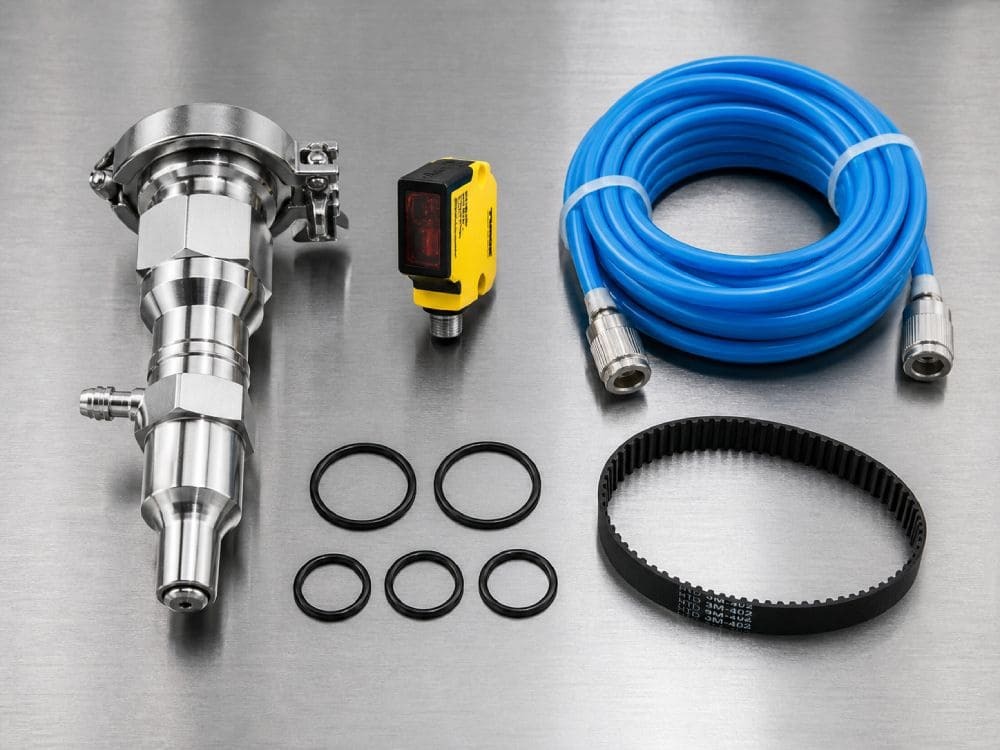
Control components, like sensors, relays, and key programmable logic controller (PLC) modules, act as the brain of the packaging line. They monitor position, timing, and system behavior, and they trigger the actions that keep everything synchronized. But that also means a failed sensor can stop a line even when all mechanical parts are working. Misreads or signal loss disrupt timing, which halts production.
Having backups ready prevents extended troubleshooting and keeps automation reliable.
3. Pneumatic Components
Pneumatic systems drive movement across filling, capping, and conveying operations. These parts cycle constantly, which makes wear and sudden failure common.
When a solenoid valve fails or an air cylinder loses pressure, motion stops instantly. Containers may not advance, caps may not apply, and the entire sequence breaks down.
Keeping these parts stocked keeps motion systems responsive and stable.
4. High-Wear Components
High-wear parts fail often and create recurring disruption. They are inexpensive individually, but their absence creates outsized problems. Common high-wear components include the following:
- Seals and gaskets
- O-rings
- Bearings
- Belts
Seals, gaskets, and O-rings degrade from chemical exposure, pressure, and temperature changes, leading to leaks or contamination. Bearings handle constant friction and can overheat or seize when worn. Belts stretch, crack, or slip over time, affecting drive systems and conveyors.
These are the parts maintenance teams replace mid-shift, under pressure, while production is waiting. Keeping a healthy stock prevents small failures from turning into long delays.
5. Accuracy & Quality-Critical Components
These components allow the line to keep running, but they directly affect product quality and consistency. When they degrade, the problem shows up in your output. Examples include the following:
- Filling nozzles
- Flow meters
- Labeling rollers and guides
- Print heads
Filling nozzles can clog or wear, causing inconsistent fill levels or dripping product. Flow meters lose accuracy over time, which affects volume control. Labeling rollers and guides influence alignment, and worn parts lead to skewed or poorly placed labels. Print heads impact traceability, and degradation can result in unreadable codes.
These issues may not stop production, but they create waste, rework, and compliance risks that add up quickly.
6. Motion & Handling Components
Motion and handling parts, like star wheels, timing screws, guide rails, and conveyor belts, control how containers move through the line. When they’re not functioning properly, flow breaks down and efficiency drops.
Star wheels and timing screws position containers precisely for filling and capping. Guide rails keep products aligned as they move, and conveyor belts drive movement across stations. When these components wear or fall out of alignment, you see bottlenecks, jams, and inconsistent spacing. The line may still run, but throughput drops and operator intervention increases.
7. Sealing & Capping Components
Sealing and capping components directly impact product integrity and customer experience. For example, chuck assemblies and spindles apply torque to secure caps, while sealing heads use heat or pressure depending on the application.
Over time, these parts wear down, leading to loose caps, leaks, or incomplete seals. These failures often show up after the product leaves the facility, which makes them especially costly.
Keeping these components in good condition protects both product quality and brand reputation.
8. Air & Fluid System Support Components
Regulators, filters, hoses, fittings, and other air and fluid system support components rarely get attention until something goes wrong, but they play a critical role in overall system stability. Regulators maintain consistent pressure, filters keep air and fluids clean, and hoses and fittings carry flow throughout the system. Small leaks, blockages, or contamination in these areas can create inconsistent performance across multiple machines.
Issues with these parts are often the root cause of problems that appear elsewhere on the line, which makes them important to monitor and stock.
9. Safety & Compliance Components
Safety components like guards and interlocks protect operators and keep your facility aligned with regulatory requirements.
Guards provide physical protection around moving parts, while interlocks prevent machines from operating when safety conditions are not met. If these components fail, production may need to stop until the issue is resolved.
Keeping replacements on hand helps restore safe operation quickly and avoids extended shutdowns.
How to Build a Spare Parts Inventory for a Packaging Operation
A strong spare parts inventory should be based on how your packaging line runs, which components fail most often, how quickly replacements can be sourced, and which parts create the biggest disruption when they are unavailable. The goal is to build an inventory that protects production without tying up unnecessary budget in parts that rarely matter.
Identify Parts That Can Stop the Entire Line
Start with the components that create the most immediate risk. If a failed part can shut down filling, capping, labeling, conveying, or control systems, it should be treated as a priority. These may include pumps, valves, sensors, solenoid valves, air cylinders, and other components with no practical workaround.
Even if some of these parts are more expensive to keep in stock, the cost is often small compared to hours or days of lost production.
Review Failure Frequency & Wear Patterns
Some parts fail predictably because they experience constant motion, pressure, friction, or product contact. Seals, gaskets, O-rings, bearings, belts, hoses, and fittings often fall into this category.
Review maintenance logs, replacement history, operator notes, and recurring service issues. If the same part keeps causing minor disruptions, it should be part of your standard inventory.
Factor in Supplier Lead Times
Lead time matters just as much as part criticality. A part that fails once a year may still deserve a place in inventory if it takes several days or weeks to replace.
Facilities should pay close attention to parts with long manufacturing times, limited availability, custom specifications, or special compatibility requirements. When these items aren’t stocked, the line may sit idle while teams wait for a replacement to arrive.
Match Parts to Your Specific Equipment
Packaging machines often depend on components that match specific equipment models, container types, product viscosities, line speeds, and production requirements. Using the wrong part can create fit issues, premature wear, inaccurate fills, poor sealing, or unnecessary stress on surrounding systems.
Equipment-specific parts help maintain the performance and reliability the line was designed to deliver.
Set Minimum Stock Levels
Once critical parts are identified, establish minimum stock levels for each item. High-use parts should be stocked in greater quantities, while lower-frequency but high-risk parts may only need one or two replacements on hand. Additionally, review minimum levels regularly as production volume, product mix, equipment age, and maintenance patterns change.
Partner with an Experienced Supplier or Manufacturer
The best spare parts strategy is built with input from people who understand the equipment. An experienced supplier or manufacturer can help identify which components are most likely to fail, which parts are critical to your specific line, and which items are worth stocking based on lead time and operational risk.
Partnering with experts is especially important for liquid packaging lines, where product viscosity, fill method, container shape, speed requirements, and sanitation needs all affect part selection. By working with a knowledgeable partner, facilities can avoid overstocking the wrong items while staying prepared for the failures that matter most.
Spare Parts for Packaging Machines: FAQs
What Spare Packaging Machine Parts Should Never Run Out
Any component that can stop your entire line should always be available, which typically includes pumps, valves, sensors, solenoid valves, and air cylinders. If there’s no workaround when the part fails, it belongs in your core spare parts inventory. Running out of these parts almost always results in immediate downtime.
How Often Should Spare Parts Inventory Be Reviewed?
Inventory should be reviewed on a consistent schedule, often aligned with preventive maintenance cycles. As equipment ages, production volume changes, or new products are introduced, failure patterns can shift. Regular reviews help keep your inventory aligned with current operating conditions rather than outdated assumptions.
How Do I Determine How Many Spare Parts to Keep?
The right quantity of spare parts to keep depends on three factors: how often the part fails, how long it takes to replace, and how critical it is to production. High-use components should be stocked in higher quantities, while lower-frequency but high-impact parts may only require one or two backups. The goal is to cover risk without overloading inventory.
What Are the Most Commonly Overlooked Spare Parts for Packaging Lines?
Facilities often overlook small, inexpensive components like O-rings, seals, fittings, and sensors. These parts fail frequently and are easy to dismiss, but they’re often the root cause of leaks, pressure issues, and unexpected shutdowns. These are also the parts that tend to be missing when needed most.
How Do Lead Times Affect Spare Parts Planning?
Lead time plays a major role in determining what spare parts should be stocked. A part that rarely fails may still need to be kept on hand if it takes days or weeks to source. Long lead times increase risk, especially for custom or equipment-specific components. Factoring this in helps prevent extended downtime while waiting for replacements.
Contact E-PAK Machinery to Find the Best Spare Parts for Your Packaging Line
Facilities that take a proactive approach to spare parts consistently outperform those that rely
E-PAK Machinery is a leader in the product filling industry, and we work closely with manufacturers to identify the components that matter most in liquid packaging systems. With deep experience across filling, capping, and labeling equipment, we offer high-quality spare parts tailored to liquid packaging lines and based on real production demands.
Contact us today so our experienced liquid packaging professionals can help you evaluate your packaging line and build a spare parts strategy focused on reliability and long-term performance.
Recent Posts
- Why Labeling Machines Misalign Labels (& How to Fix It)
- Labeling Machine Guide: Choosing the Right System for Your Product
- How to Increase Filling Line Throughput Without Sacrificing Accuracy
- What Causes Inconsistent Fill Levels in Liquid Filling Lines?
- How to Vet a Liquid Filling Machine Manufacturer
