 Loading... Please wait...
How to Calculate Packaging Machine ROI: Costs, Savings, & Payback Period Explained
Posted on 6th May 2026
For many manufacturers, the decision to invest in new packaging equipment or upgrade an existing line comes down to one question: Will it pay off?
The cost of a packaging machine goes far beyond the price tag, and without a clear way to measure return on investment, it becomes difficult to justify the spend or compare options. What really matters is how that investment impacts your production speed, labor costs, product quality, and long-term profitability.
In this article, we explore how to calculate packaging machine ROI in a practical, straightforward way. You will learn how to evaluate upfront costs, estimate ongoing expenses, quantify savings, and determine how long it takes for your investment to pay for itself.
What ROI Means for Packaging Equipment
Return on investment (ROI) is a financial metric used to evaluate how much value an investment generates compared to its cost. In packaging operations, ROI is not limited to direct financial returns but also reflects improvements in efficiency, consistency, and scalability.
Packaging machines deliver value in two primary ways.
First, direct returns include measurable financial gains such as reduced labor costs, increased output, and lower waste. These are typically the easiest to quantify.
Second, indirect returns come from improved consistency, reduced human error, better product presentation, and the ability to scale production without adding proportional labor. While harder to measure, these factors play a significant role in long-term profitability.
How to Calculate Packaging Machine ROI: 6 Steps to Follow
A strong packaging machine ROI calculation looks at the full investment, the yearly cost to operate the machine, the financial gains it creates, and the amount of time it takes to pay back the initial spend to get a complete picture of its impact.
Step 1: Identify Total Investment Cost
Start by adding up every cost required to purchase, install, and bring the machine into production.
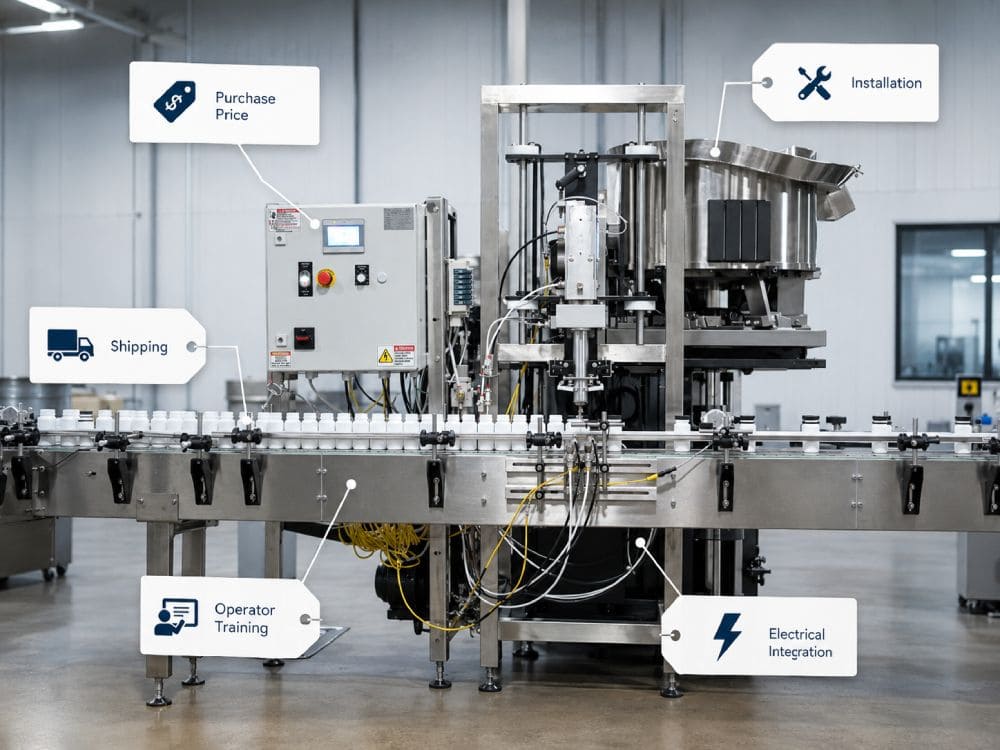
The equipment price is only one part of the investment. Include the purchase price, shipping, installation, setup, operator training, and any facility adjustments needed to support the machine. Depending on the system, you may also need to account for electrical work, compressed air requirements, conveyors, controls, or integration with other equipment on the packaging line.
The more complete this number is, the more reliable the ROI calculation will be. If you only use the machine’s sticker price, the final ROI may look stronger than it really is.
Step 2: Calculate Annual Operating Costs
After identifying the initial investment, estimate what it will cost to run the machine each year. These expenses reduce the net financial benefit of the equipment, so they need to be included before calculating ROI.
Common operating costs include routine maintenance, replacement parts, energy use, consumables, service visits, and operator labor. If the machine requires one person to load materials, monitor production, or perform changeovers, include that labor cost in the calculation.
A realistic operating cost estimate helps prevent inflated ROI projections. It also makes it easier to compare different machines, especially when one option has a lower upfront cost but higher long-term expenses.
Step 3: Quantify Annual Savings & Revenue Gains
Next, estimate how much financial value the machine can create each year. Start with the areas that are easiest to measure.
Labor savings are often one of the biggest contributors. Review how many employees are currently involved in the packaging process, how many hours they spend on those tasks, and how much that labor costs annually. Then compare that number to the labor needed after automation.
Production gains should also be included. A faster machine may allow the company to package more units per shift, reduce overtime, or meet higher demand without adding another production line. If the added capacity can generate more sales, include the expected revenue increase or margin contribution.
Other measurable gains may come from lower product waste, fewer packaging defects, reduced rework, shorter changeovers, and less downtime compared to older or manual processes.
Step 4: Calculate Net Annual Benefit
Once you have the annual savings and revenue gains, subtract the annual operating costs. The result is the net annual benefit.
Use this formula:
Net Annual Benefit = Total Annual Savings and Revenue Gains – Annual Operating Costs
For example, if a machine creates $110,000 in annual savings and added revenue but costs $15,000 per year to operate, the net annual benefit is $95,000.
The net annual benefit figure shows the true yearly financial return after ongoing expenses are accounted for.
Step 5: Calculate ROI Percentage
After calculating the net annual benefit, divide that number by the total investment cost. Then multiply the result by 100 to convert it into a percentage.
Use this formula:
ROI Percentage = (Net Annual Benefit ÷ Total Investment Cost) × 100
For example, if the net annual benefit is $95,000 and the total investment cost is $120,000, the ROI is approximately 79%.
The ROI percentage gives decision-makers a simple way to compare equipment options, evaluate capital investments, and determine whether the machine can deliver enough value to justify the cost.
Step 6: Estimate the Payback Period
The payback period shows how long it will take for the machine to recover its initial cost. To calculate it, divide the total investment cost by the net annual benefit.
Use this formula:
Payback Period = Total Investment Cost ÷ Net Annual Benefit
For example, a $120,000 investment with a $95,000 net annual benefit would have a payback period of about 1.26 years.
A shorter payback period means the company recovers its investment faster. In many packaging operations, a payback period of one to three years is considered strong, although the right benchmark depends on production volume, profit margins, and growth plans.
Real-World Example: ROI Calculation for a Packaging Machine
Consider a manufacturer evaluating a new filling and capping machine to replace a semi-manual process that requires multiple operators and limits production speed.
The total investment cost for the new system is $120,000, which includes the equipment itself, installation, and operator training needed to get the line up and running. Once operational, the machine is expected to cost about $15,000 per year to run, including routine maintenance, energy usage, and consumables required for daily production.
On the savings side, the impact is significant. By automating key parts of the process, the company can reduce labor by two operators, resulting in $80,000 in annual labor savings. In addition, the increased speed and efficiency of the machine allows for higher output, contributing an estimated $30,000 in additional annual revenue.
To calculate the total annual financial impact, combine the savings and gains:
Total Annual Savings and Gains = $80,000 (labor savings) + $30,000 (additional revenue) = $110,000
Next, subtract the annual operating costs to find the net annual benefit:
Net Annual Benefit = $110,000 – $15,000 = $95,000
With the net annual benefit calculated, you can now determine the ROI percentage:
ROI Percentage = ($95,000 ÷ $120,000) × 100 = 79.1%
Finally, calculate how long it takes to recover the initial investment:
Payback Period = $120,000 ÷ $95,000 = 1.26 years
This example illustrates how a packaging machine can move from being a capital expense to a profit driver when both cost savings and production gains are factored into the equation.
Key Factors That Impact Packaging Machine ROI
Even with a clear formula, ROI is not a fixed number. It shifts based on how the machine performs in your specific operation and how well it aligns with your production goals. Understanding the factors that influence ROI helps you make more accurate projections and avoid costly assumptions.
Machine Lifespan
A machine that runs reliably for many years delivers more value over time. Spreading the initial investment across a longer lifespan improves overall return and reduces the annualized cost of the equipment.
When evaluating lifespan, look beyond manufacturer estimates. Consider build quality, component durability, and how the machine performs in similar production environments. A slightly higher upfront cost often leads to stronger long-term returns if the equipment lasts longer and requires fewer replacements.
Maintenance Requirements
Maintenance plays a direct role in both cost and uptime. Machines that require frequent repairs or specialized service can quickly increase operating expenses and disrupt production.
Review the expected maintenance schedule, availability of replacement parts, and whether your team can handle routine service in-house. Predictable, preventive maintenance tends to be more cost-effective than reactive repairs, and it helps keep production running consistently.
Energy Consumption
Energy usage may seem minor at first, but it adds up quickly in high-volume operations. Equipment that runs continuously or across multiple shifts can generate significant utility costs over time.
Compare energy requirements between machines, especially when upgrading from older equipment. More efficient systems can reduce long-term operating expenses and improve overall profitability.
Production Volume & Demand
The value of a packaging machine increases when it is used close to its full capacity. Underutilized equipment spreads the investment across fewer units, which can extend the payback period.
Before investing, evaluate current production levels and future demand. If growth is expected, a higher-capacity machine may deliver stronger ROI over time. If demand is inconsistent, flexibility and scalability become more important.
Labor Availability & Cost Trends
Labor costs continue to rise in many industries, and staffing challenges can limit production. Automation reduces dependence on manual labor and stabilizes output, even when hiring is difficult.
When calculating ROI, consider not only current labor costs but also future increases, turnover, and training time. Machines that reduce labor requirements can create both immediate savings and long-term operational stability.
Flexibility & Changeover Time
Manufacturers that produce multiple products need equipment that can adapt quickly. Machines with faster changeovers reduce downtime between runs and allow for more efficient scheduling.
Flexibility also supports growth. A system that can handle different container sizes, product types, or packaging formats can extend the useful life of the equipment and improve ROI over time.
Product Waste & Quality Control
Inconsistent packaging leads to waste, rework, and potential product loss. Automated systems improve precision, which helps reduce errors and maintain consistent quality.
Lower defect rates translate directly into cost savings. In addition, consistent packaging can improve customer satisfaction and reduce returns, which adds another layer of value beyond immediate production gains.
When Does a Packaging Machine Investment Make Financial Sense?
Certain signs make the decision to invest in new packaging equipment much easier.
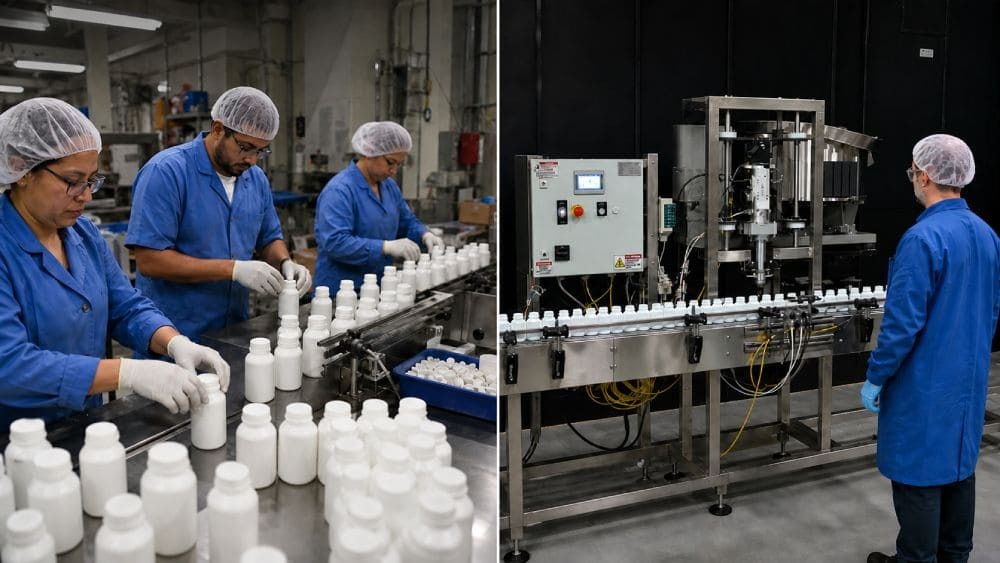
Heavy reliance on manual labor is one of the biggest indicators. Labor costs add up quickly and can create inconsistencies in output. Automation helps reduce both cost and variability.
Packaging bottlenecks are another common trigger. If production is being held back at the packaging stage, a new machine can increase overall throughput without expanding the rest of the line.
Rising labor costs, hiring challenges, and growing demand also shift the equation. When it becomes harder or more expensive to scale with people, equipment often becomes the more efficient path forward.
When these factors start stacking up, investing in a packaging machine typically moves from optional to financially justified.
FAQs About Packaging Machine ROI
How Long Does It Typically Take to See ROI on a Packaging Machine?
Most packaging machines reach payback within one to three years, depending on labor savings, production volume, and operating costs.
What Is Considered a Good ROI Percentage for Packaging Equipment?
A strong ROI for packaging equipment typically falls above 50% annually, though acceptable benchmarks vary by industry and business goals.
How Do I Estimate Labor Savings Accurately?
To estimate labor savings accurately, start by identifying current labor costs associated with packaging tasks, including wages, benefits, and overtime. Then compare that number with the reduced labor required after automation.
Should I Lease or Buy a Packaging Machine for Better ROI?
Leasing a packaging machine may reduce upfront costs and improve cash flow, while purchasing can deliver higher long-term returns. The right choice depends on your financial strategy and growth plans.
Can Smaller Operations Still Justify Packaging Automation?
Yes, smaller operations can benefit from automation if labor costs are high or if consistent quality and scalability are priorities.
Contact E-PAK Machinery to Invest in High-Quality Liquid Packaging Machines
E-PAK Machinery is a leader in the product filling industry, and we work with manufacturers to identify the right packaging solutions based on real production needs and financial goals. Our goal is to provide you with high-quality and durable equipment that meets your unique packaging needs. If you are evaluating new equipment or upgrades, our team can help you assess potential returns and select a system that aligns with your operation.
Contact us today to start a conversation about your packaging process and explore solutions designed to deliver measurable results.
Recent Posts
- Custom-Engineered vs. Standard Filling Machines: When Each Makes Sense
- Why Labeling Machines Misalign Labels (& How to Fix It)
- Labeling Machine Guide: Choosing the Right System for Your Product
- How to Increase Filling Line Throughput Without Sacrificing Accuracy
- What Causes Inconsistent Fill Levels in Liquid Filling Lines?
