 Loading... Please wait...
Labeling Machine Guide: Choosing the Right System for Your Product
Posted on 22nd Sep 2026
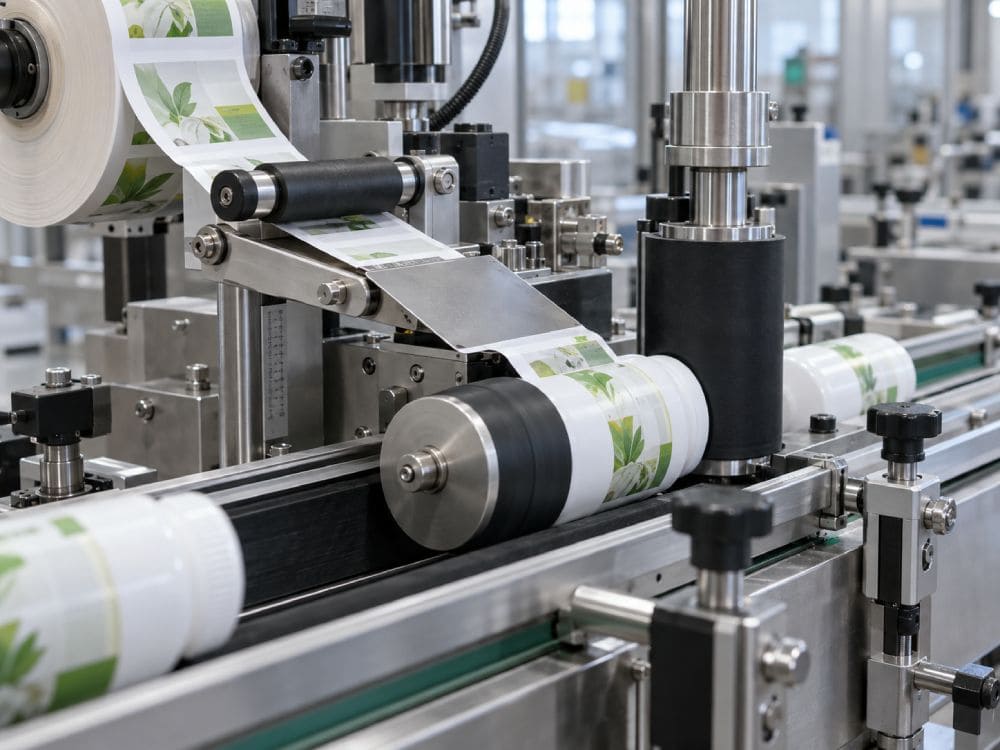
Choosing the right labeling machine is one of those decisions that looks straightforward until you are standing in front of a shortlist of equipment and trying to figure out why two machines with similar specs produce very different results on your line.
The label is one of the last things applied to a container before it ships. It carries product information, compliance data, branding, and in many industries, regulatory requirements. When labeling goes wrong, it creates waste, rework, compliance risk, and a finished product that does not look the way it should on the shelf.
Getting the decision right depends on understanding your container, your label format, your production volume, and how the labeler needs to fit into the rest of the line. This guide covers all of it.
In this guide:
- Types of Labeling Machines
- Inline vs. Rotary Labeling Machines
- Manual vs. Semi-Automatic vs. Automatic Labeling Machines
- Key Features to Look for in a Labeling Machine
- How to Choose the Right Labeling Machine for Your Application
- FAQs
Types of Labeling Machines
Labeling machines are categorized by the type of label they apply. Understanding the categories makes it easier to narrow down which technology fits a given container and application.
Pressure-Sensitive Labelers
Pressure-sensitive labelers apply self-adhesive labels directly to the container surface. The label is released from a backing liner and pressed onto the container as it moves through the machine. This is the most widely used labeling technology in liquid packaging because it works with a broad range of label materials, container shapes, and surface types. Common configurations include wrap-around, front-and-back, front-only, and top labelers.
Sleeve Labelers
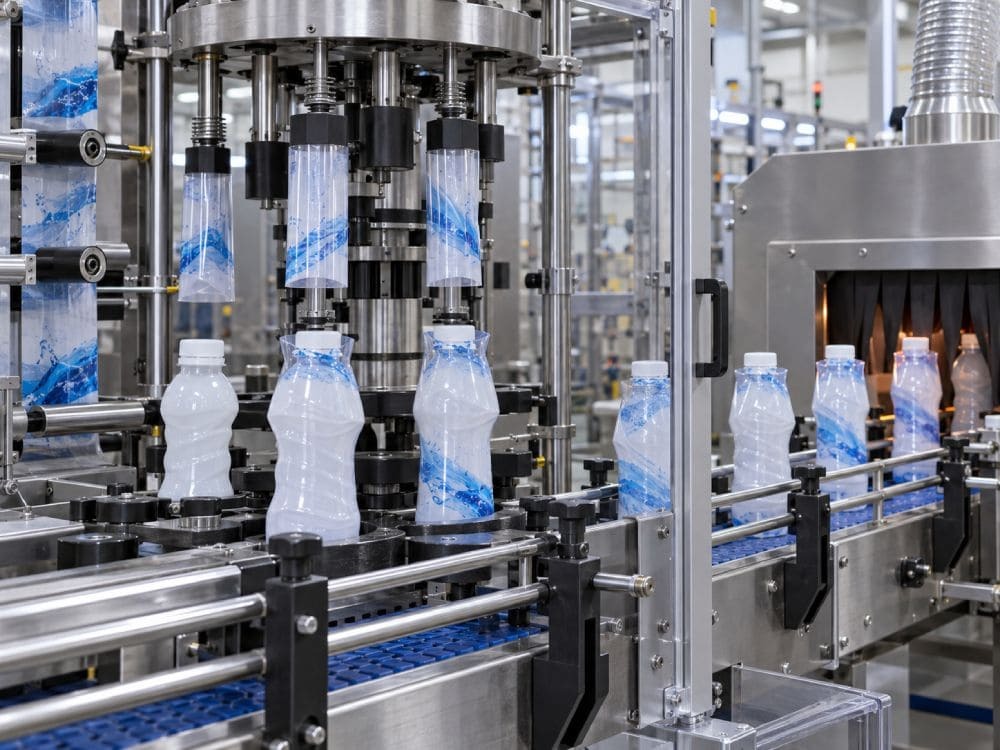
Sleeve labelers apply a heat-shrink or stretch sleeve label over the container. The sleeve conforms to the container shape when heat is applied. This method is used when full-body coverage is needed, when the container has an irregular shape a pressure-sensitive label cannot conform to cleanly, or when tamper-evidence is required. Sleeve labeling adds a heat tunnel to the line, which increases equipment footprint and energy requirements.
Glue Labelers
Glue labelers apply paper or film labels using hot melt or cold glue adhesive rather than a pressure-sensitive backing liner. They are common in high-volume beverage, food, and glass container applications where pre-cut paper labels are standard. Glue labeling tends to be more cost-effective at very high speeds because cut labels are less expensive than pressure-sensitive stock, but the equipment is more complex to clean and maintain.
Inline vs. Rotary Labeling Machines
Beyond label type, labeling machines also differ in how they move containers through the machine. The two primary configurations are inline and rotary. The right choice depends on production volume, floor space, and how the labeler integrates with the rest of the line.
Inline Labelers
Inline labelers move containers through the machine in a single-file line on a conveyor. This is the standard configuration for most liquid packaging lines because it integrates cleanly with existing conveyor systems, handles a wide range of container sizes, and supports fast changeovers between SKUs. For the majority of liquid packaging operations, an inline labeler is the right starting point. They are also easier to integrate with upstream fillers and cappers, which is a meaningful advantage when building or expanding a line.
Rotary Labelers
Rotary labelers use a rotating carousel to process containers at very high speeds. They are typically reserved for high-volume operations where inline throughput cannot meet production requirements. The tradeoff is a larger footprint, higher cost, and more complex changeovers compared to inline systems. If your operation is running thousands of containers per hour and has already optimized an inline setup, rotary is worth evaluating. For most manufacturers, though, inline is the more practical and cost-effective choice.
Inline vs Rotary Labeling Machine Comparison
|
Factor |
Inline Labeler |
Rotary Labeler |
|
Throughput |
Moderate to high |
Very high |
|
Footprint |
Compact |
Larger |
|
Changeover speed |
Faster |
Slower |
|
Integration complexity |
Lower |
Higher |
|
Upfront cost |
Lower |
Higher |
|
Best for |
Most liquid packaging lines |
Very high-volume operations |
Manual vs Semi-Automatic vs Automatic Labeling Machines
Automation level is one of the most consequential decisions in labeling equipment selection. It affects labor requirements, output consistency, changeover time, and total cost of ownership. The right level depends on your production volume, SKU count, and where you are in your growth trajectory.
Manual Labeling Machines
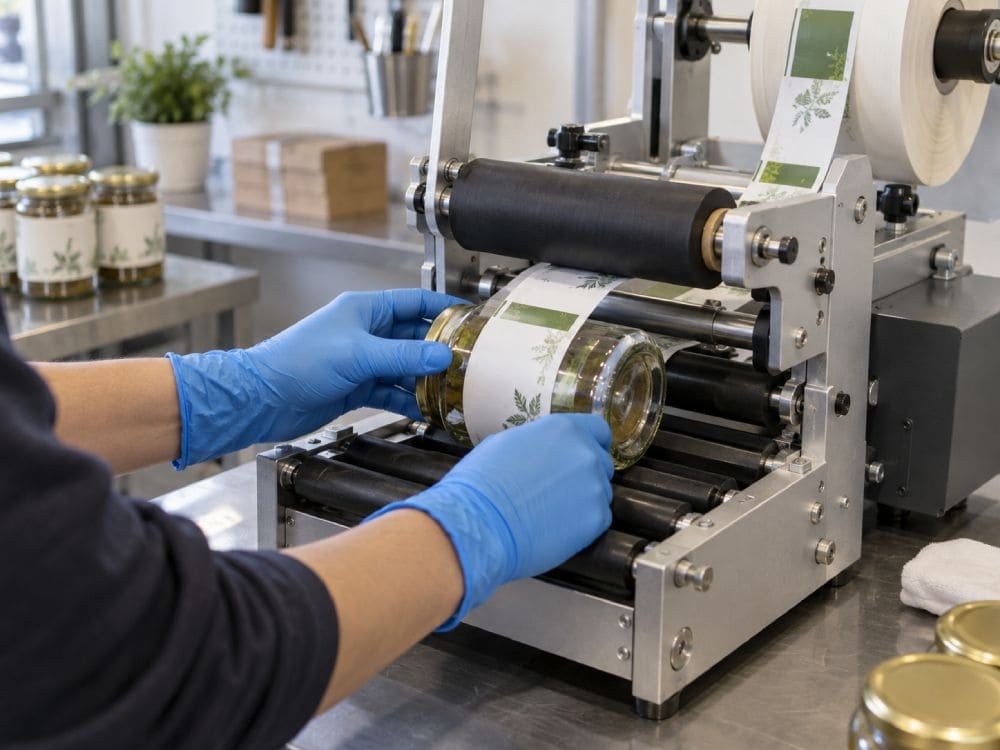
Manual labeling means an operator applies each label by hand, either freehand or with the help of a simple label dispenser that peels the backing and presents the label for application.
Manual labeling is appropriate when:
- Production volumes are very low
- The label placement tolerance is forgiving and consistency is not critical
- Capital investment needs to be minimal
The limitation is obvious: manual labeling does not scale. As volume grows, labor costs rise, consistency declines, and the labeling station becomes the bottleneck for the entire line. Most operations that start with manual labeling outgrow it quickly.
Semi-Automatic Labeling Machines
Semi-automatic labelers automate the label application itself but require an operator to position and feed containers into the machine.
Semi-automatic labeling is appropriate when:
- Production volume is moderate
- The operation runs multiple container sizes or label configurations that require frequent changeovers
- Labor is available and the cost of a fully automatic system is not yet justified
- The product requires careful handling that makes fully automated container feeding impractical
Semi-automatic labelers offer a meaningful step up in consistency and speed over manual labeling without the full investment of an automatic inline system. They are a practical choice for growing operations that are not yet running high-volume continuous production.
Automatic Labeling Machines
Automatic labelers integrate directly into the packaging line. Containers are fed in continuously, the machine applies labels without operator intervention, and the labeled containers exit on the conveyor to the next station.
Automatic labeling is appropriate when:
- Production volume requires consistent output across full shifts
- The line runs continuously and manual container feeding would create a bottleneck
- Label placement consistency is critical for compliance or brand presentation
- The operation is building toward a fully integrated packaging line
For most liquid packaging operations running at commercial volume, an automatic inline labeler is the target configuration. It eliminates the labor dependency of manual and semi-automatic systems and integrates cleanly with the filler, capper, and conveyor.
Manual vs Semi-Automatic vs Automatic Labeling Machine Comparison
|
Factor |
Manual |
Semi-Automatic |
Automatic |
|
Throughput |
Very low |
Low to moderate |
Moderate to high |
|
Labor required |
High |
Moderate |
Low |
|
Consistency |
Variable |
Good |
Excellent |
|
Upfront cost |
Minimal |
Moderate |
Higher |
|
Integration with line |
None |
Partial |
Full |
|
Best for |
Startups, very low volume |
Growing operations, moderate volume |
Commercial production, continuous lines |
Pro Tip: The automation level decision should be made with future production volume in mind, not just current volume. A semi-automatic machine that fits today's output may become the line's bottleneck within 12 to 18 months if growth is expected. Factor in the cost of upgrading again when evaluating the initial investment.
Key Features to Look for in a Labeling Machine
Not all labeling machines are built the same, and the feature set that matters most depends on your application. These are the areas worth evaluating before making a decision.
Adjustability & Changeover
If you run multiple container sizes or label formats, the machine needs to accommodate those changes without excessive downtime. Look for tool-free adjustments, clearly marked settings, and the ability to save parameters for each SKU. Machines that are difficult to change over become a production bottleneck when your SKU count grows.
Label Placement Accuracy
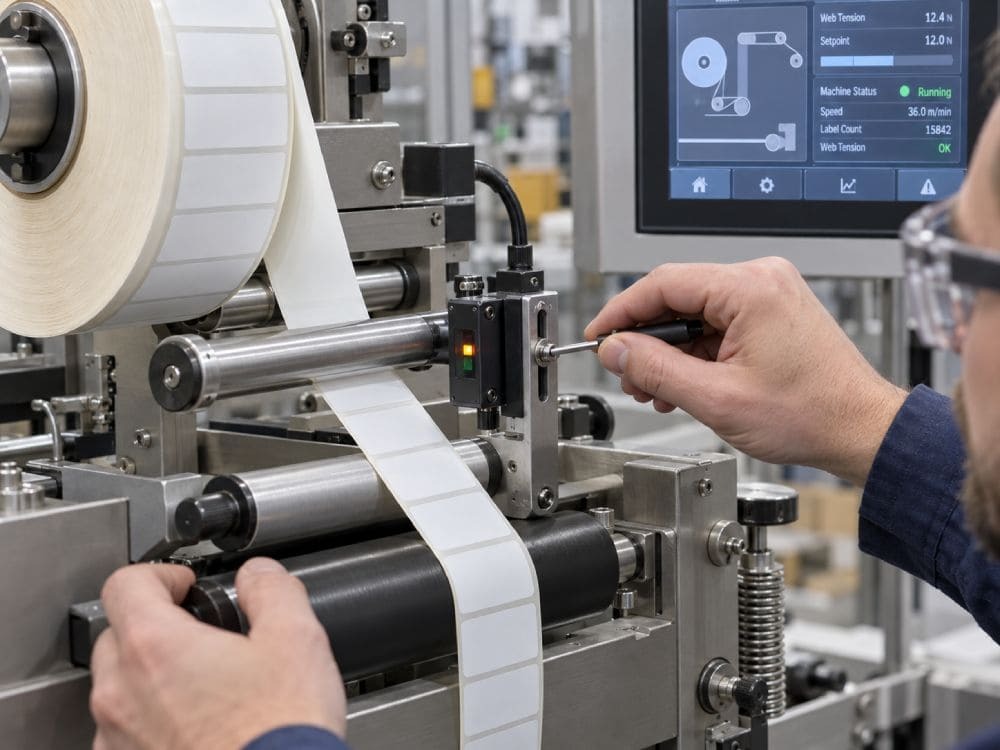
Placement accuracy affects both compliance and shelf appearance. In regulated industries, a label that shifts even slightly can cover required disclosures or move lot codes out of position. Look for machines with consistent web tension control, container stabilization, and applicator designs suited to your container shape.
Container Compatibility
The machine needs to handle your specific container, not just a generic category. Factors that affect compatibility include container material, shape, surface texture, and how the container behaves on a conveyor. Different containers each create different demands on the labeling system. Confirm compatibility with actual containers before purchasing.
Build Quality & Sanitation
For food, beverage, and pharmaceutical applications, the machine needs to be cleanable and constructed of materials appropriate for the environment. Stainless steel construction, accessible product contact areas, and designs that do not trap residue are important for operations with sanitation requirements.
Speed & Throughput
Confirm that the machine's rated speed matches your production requirements, not just your current volume but your projected volume as well. A machine that barely meets today's demand may become a bottleneck as order volume grows. Factor in the full line speed, not just the labeler's isolated throughput, since the labeler needs to keep pace with the filler and capper upstream.
How to Choose the Right Labeling Machine for Your Application
The right labeling machine comes down to the intersection of four variables: the container, the label, the production volume, and the line. Working through each one systematically narrows the field quickly.
Start with the Container
The container drives most of the early decisions. Before evaluating machines, document the following:
- Shape: Is the container cylindrical, oval, rectangular, tapered, or irregular?
- Material: Plastic, glass, or metal? Each handles differently on conveyors and responds differently to label adhesive.
- Size range: What are the minimum and maximum container diameters and heights the machine needs to handle?
- Surface condition: Is the container surface clean, dry, and free of texture or seams that could affect label adhesion?
Define the Label Requirements
With the container defined, the label requirements become clearer:
- Number of labels: One label, front and back, or full-body coverage?
- Label material: Paper, film, or foil? Each has different stiffness, adhesive requirements, and behavior on the machine.
- Label size: What are the dimensions of each label?
- Placement tolerance: How precise does placement need to be? Is there a regulatory requirement for label position?
- Coding: Does the label need a printed lot code or expiration date applied inline?
Determine Production Speed Requirements
Define the required throughput in containers per minute. Then add a buffer. A machine rated at exactly the required speed will be running at its limit from day one, with no room for minor variations in container handling, label application, or operator intervention.
Also consider how the labeler speed needs to match the rest of the line. If the filler runs at 50 containers per minute, the labeler must be capable of at least that rate or it becomes the bottleneck.
Evaluate Line Integration Requirements
A labeler does not operate in isolation. Consider:
- Conveyor compatibility: What is the conveyor height, width, and speed? The labeler needs to accept containers from the existing conveyor and return them at the same level.
- Upstream equipment: What is the last station before the labeler? Is the container arriving upright, dry, and correctly oriented?
- Downstream equipment: Where does the container go after labeling? Secondary packaging, coding, or direct to case packing?
- Floor space: What is the available footprint for the labeling station?
Questions to Ask Before Requesting a Quote
Before contacting a labeling machine supplier, be prepared to provide:
- Container shape, material, size range, and surface condition
- Number of labels per container and label dimensions
- Label material and any special adhesive requirements
- Required throughput in containers per minute
- Number of SKUs and changeover frequency
- Coding requirements (lot code, expiration date, barcode)
- Current line configuration or planned line layout
- Industry and any applicable regulatory requirements
- Available floor space and utility connections
A qualified supplier should ask most of these questions before recommending a machine. If a recommendation comes before these details are gathered, that is worth noting. The right machine depends on the application, not the other way around.
FAQs
What Features Should I Look for in an Automatic Labeling Machine?
The most important features are label placement accuracy, adjustability for different container sizes, changeover speed, and conveyor integration. For regulated industries, look for sensor-based placement verification and cleanable construction. Speed should be matched to your full line output, not evaluated in isolation.
How Do I Choose Between Pressure-Sensitive and Sleeve Labeling for My Product Line?
Pressure-sensitive labeling is the right choice for most standard containers with flat, cylindrical, or oval surfaces and separate label panels. Sleeve labeling makes sense when the container is irregular or tapered, when full-body coverage is required, or when tamper evidence is needed.
How Do I Choose Between Manual and Automatic Labeling Machines?
The decision comes down to volume and consistency requirements. Manual labeling works for very low volumes but produces inconsistent placement that creates problems at scale. Automatic equipment delivers consistent results and reduces labor, but requires a higher upfront investment. Semi-automatic is a practical middle ground for operations that have outgrown manual but are not yet running the volumes that justify full automation.
Automatic Labeling Machine vs. Semi-Automatic: What’s the Difference?
A semi-automatic labeler requires an operator to place each container and initiate the label cycle. An automatic labeler runs containers through continuously on a conveyor with no manual intervention during the cycle. Automatic equipment delivers higher throughput, more consistent placement, and lower per-unit labor cost. Semi-automatic equipment costs less upfront and is easier to justify at lower production volumes. The right choice depends on your containers per shift, your labor costs, and how much placement consistency your application requires.
What Types of Containers Can a Labeling Machine Handle?
Most labeling machines are designed around specific container shapes. Cylindrical bottles, flat panels, oval containers, and square bottles each require different applicator configurations. Irregular or tapered containers are best handled by sleeve labelers. Confirm container compatibility with the manufacturer before purchasing, and test with actual containers when possible.
How Does Label Placement Accuracy Affect Compliance?
In regulated industries such as pharmaceuticals, food, and chemicals, label placement is a compliance issue, not just an aesthetic one. A label that shifts out of position can cover required disclosures, move lot codes or expiration dates out of readable position, or fail to meet net content labeling requirements. Automatic equipment with placement verification reduces this risk significantly compared to manual or semi-automatic systems.
Find the Right Labeling Equipment at E-PAK Machinery
Choosing a labeling machine is not a one-size-fits-all decision. The right system depends on the container, the label format, the production volume, the line configuration, and the industry requirements that apply to the product. Getting those variables right from the start avoids costly equipment mismatches, downtime, and label quality problems that are difficult to fix after the machine is installed.
At E-PAK Machinery, we offer labeling equipment for liquid packaging applications across a wide range of industries. Whether you are adding a labeler to an existing line, building a new line from the ground up, or replacing equipment that is no longer meeting production requirements, our team can help you work through the application details and identify the right solution.
Are you evaluating labeling equipment for a new or existing packaging line? Contact us today to discuss your container, label format, production goals, and line configuration, and we will help you find the right system for your application.
Recent Posts
- Why Labeling Machines Misalign Labels (& How to Fix It)
- Labeling Machine Guide: Choosing the Right System for Your Product
- How to Increase Filling Line Throughput Without Sacrificing Accuracy
- What Causes Inconsistent Fill Levels in Liquid Filling Lines?
- How to Vet a Liquid Filling Machine Manufacturer
